
LNH31.
Cross-border trade · B2B · Amazon
Operations10·
Optimizing Warehouse Receiving and Put-Away for Cross-Border Inventory
Operational guide to optimizing warehouse receiving and put-away processes for cross-border inventory management, covering appointment scheduling, container unloading, inspection checklists, WMS integration, slotting strategies, and KPIs for FBA-bound shipments.
warehouse receiving optimizationput-away process efficiencyinventory receiving best practices
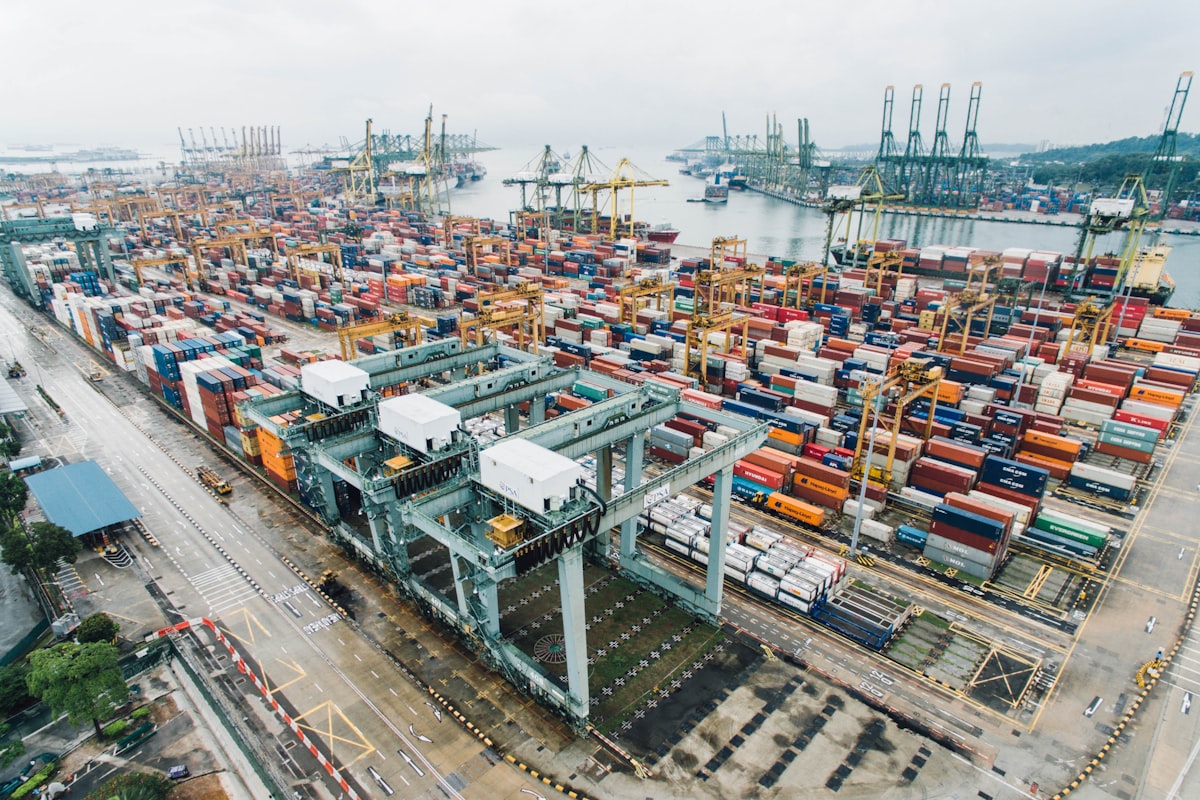
Receiving Dock Efficiency and Appointment Management
The receiving dock is the gateway for all inbound inventory and directly impacts overall warehouse throughput. For Taiwan brands operating US warehouse facilities or 3PL partnerships, receiving efficiency determines how quickly products move from ocean container to sellable inventory. Industry benchmarks show that top-performing warehouses process inbound containers within 4 hours of dock arrival, while average warehouses take 8-12 hours. This difference means the faster operation can process 2-3 containers per dock door per day versus 1 container, effectively doubling receiving capacity without adding infrastructure.
Appointment scheduling systems prevent dock congestion and ensure adequate labor is available for each incoming shipment. Leading scheduling platforms include Kuebix TMS ($200-500/month), OpenDock ($300-800/month), and C3 Reservations ($150-400/month). Schedule receiving appointments in 2-hour windows, allocating based on shipment type: ocean containers require 3-4 hours for 20-foot containers and 5-7 hours for 40-foot containers, LTL deliveries need 1-2 hours, and parcel receipts (returns processing) need 30-minute windows. Block appointments at least 48 hours in advance, and maintain a 20% buffer in daily capacity for unscheduled urgent deliveries.
Container unloading follows a systematic process designed to maximize speed while ensuring accuracy. Before opening the container, verify the seal number against the bill of lading to confirm chain of custody. Photograph the container interior before and after unloading for insurance documentation. For floor-loaded containers (common from Taiwan shipments without pallets), assign a 4-person team: 2 unloaders inside the container, 1 operator on the dock for palletizing, and 1 checker verifying quantities against the packing list. A trained team unloads a floor-loaded 20-foot container in 3-4 hours (approximately 800-1,200 cartons) and a 40-foot container in 5-7 hours (1,500-2,500 cartons).
Pre-receiving documentation review should happen 48-72 hours before the shipment arrives. Create a receiving work order in your WMS containing the purchase order number, expected SKUs with quantities, lot numbers and expiry dates (if applicable), and any special handling instructions (fragile, temperature-sensitive, hazmat). Pre-print receiving labels and location assignments so the team can immediately apply labels as product comes off the container. This pre-staging reduces at-dock processing time by 25-35% compared to creating documentation during receiving. Distribute the receiving work order to the dock team during the pre-shift meeting so everyone understands the day's incoming workload.
Receiving Inspection Protocols for Import Inventory
Every inbound shipment requires a standardized inspection against a receiving checklist to prevent quality issues from propagating into your sellable inventory. The inspection checklist for cross-border inventory should cover five categories: quantity verification (count all cartons against packing list, random count 10% of cartons for piece accuracy), condition assessment (check for water damage, crushing, pest contamination during ocean transit), lot code and expiry date verification (confirm dates match purchase order and meet minimum shelf life requirements), labeling compliance (verify UPC barcodes scan correctly, country of origin marking present, regulatory labels intact), and documentation completeness (commercial invoice matches physical goods, certificates of conformity included).
Sampling inspection using AQL standards should be applied to every receiving event. For standard shipments from established suppliers, use AQL 2.5 Level II: from a shipment of 3,201-10,000 units, inspect 200 random units across different cartons. For first-time shipments from new suppliers or product launches, tighten to AQL 1.0 Level III, inspecting 315 units from the same lot size. Document all inspection results on the receiving inspection form with inspector name, date, time, lot number, and pass/fail disposition. Products failing inspection should be quarantined in a designated "hold" area (clearly marked with red floor tape or signage) until the quality team makes a disposition decision.
Ocean transit creates unique receiving challenges that warehouse teams must be trained to identify. Salt air corrosion affects metal products and electronics connectors; inspect for white crystal deposits or discoloration on metal surfaces. Container condensation (known as "container rain") causes water damage to top-layer cartons in approximately 8-12% of ocean containers during Pacific crossings. Mold growth can occur in shipments with transit times exceeding 21 days, particularly during summer months (June-September). Temperature excursion indicators (if included in the shipment) should be checked before unloading; readings exceeding product specifications require quarantine and manufacturer consultation before acceptance.
Implement a nonconforming material report (NCMR) process for all receiving discrepancies. The NCMR documents the issue (quantity shortage, damage, wrong product, quality defect), photographs evidence, estimates financial impact, and assigns responsibility for resolution. File claims against the ocean carrier within 3 days of container return for transit damage (required by Carriage of Goods by Sea Act), and against the supplier within the timeframe specified in your purchase agreement (typically 7-14 days for quantity/quality discrepancies). Maintain a receiving accuracy dashboard showing: percentage of shipments received without discrepancy (target >97%), average receiving processing time per container, and NCMR closure time (target <5 business days).
Put-Away Strategies and WMS Integration
Put-away is the process of moving received inventory from the dock staging area to its assigned storage location. Two primary strategies exist: directed put-away, where the WMS assigns specific locations based on product characteristics and algorithms, and undirected put-away, where warehouse workers choose locations based on visual assessment and experience. Directed put-away reduces travel time by 20-35% and improves space utilization by 15-25% compared to undirected methods. For cross-border inventory operations handling 50+ SKUs, directed put-away through a WMS is strongly recommended.
WMS (Warehouse Management System) platforms that integrate effectively with cross-border e-commerce operations include SKULabs ($299-999/month, excellent for Amazon FBA prep), ShipBob WMS (included with ShipBob 3PL service), Deposco ($2,000-5,000/month for mid-market), and Extensiv (formerly 3PL Central, $1,500-4,000/month). Key WMS features for cross-border inventory include multi-marketplace order routing (Amazon, Shopify, Walmart), FBA labeling and prep workflow management, lot tracking and expiry date management (critical for supplements and food products), and customs documentation linkage (connecting PO to customs entry number for audit trail).
Slotting assignment logic determines where each SKU is stored to optimize picking efficiency. Apply the ABC velocity classification: A-items (top 20% of SKUs generating 80% of picks) go in prime locations at waist height within 50 feet of packing stations, B-items (next 30% of SKUs, 15% of picks) occupy mid-range locations, and C-items (bottom 50% of SKUs, 5% of picks) are stored in high rack positions or distant aisles. For Taiwan brands with seasonal products, reslot inventory monthly: summer products move to A-positions in April-May, and holiday products take priority in September-October. Reslotting a 5,000 SKU warehouse takes 2-3 days and typically improves pick rates by 15-20%.
FBA-bound inventory requires a dedicated put-away workflow that integrates FBA prep activities. When receiving inventory destined for Amazon FBA, the put-away process should include three additional steps: FNSKU label application (if not pre-applied at the Taiwan factory, cost $0.20-0.40 per unit for 3PL labeling), poly bagging for products requiring it per Amazon guidelines ($0.15-0.30 per unit), and bubble wrap or overbox for fragile items ($0.50-1.50 per unit). Store FBA-prepped inventory in designated FBA staging zones, separate from direct-to-consumer inventory, to prevent mixing during order fulfillment. A well-organized FBA staging area reduces FBA shipment creation time from 3-4 hours to 1-2 hours per shipment.
KPIs, Cross-Docking, and Continuous Improvement
Warehouse receiving performance should be measured against five core KPIs updated weekly. Receiving accuracy rate (target >99.5%): percentage of received units with correct quantity, SKU, and condition versus purchase order. Put-away time (target <24 hours from receiving completion): elapsed time from dock receipt to inventory being available for picking in the WMS. Dock-to-stock cycle time (target <48 hours): total elapsed time from container arrival to inventory being sellable. Labor productivity (target 40-60 cases per person-hour for receiving, 30-50 locations per person-hour for put-away). Damage rate (target <0.5% of received units): percentage of units received with transit damage or quality defects.
Cross-docking offers significant time and cost savings for FBA-bound shipments when properly executed. In a cross-dock workflow, received containers are unloaded, inspected, repalletized by FBA destination fulfillment center, and loaded onto outbound trucks within 24-48 hours without entering long-term storage. This is ideal for Amazon-optimized shipment splits where inventory must go to 4-6 different FBA warehouses. Cross-docking reduces per-unit handling costs by $0.30-0.80 compared to standard receive-store-pick-ship workflows and eliminates storage fees for transit inventory. Requirements for successful cross-docking include advance ASN data from the Taiwan factory (48 hours before arrival), pre-printed FBA labels for each destination, and pre-scheduled outbound carrier appointments.
Continuous improvement in receiving operations follows a monthly review cycle. Analyze the top 5 receiving errors from the previous month, categorize root causes (supplier packaging issues, shipping damage, documentation errors, warehouse team mistakes), and implement targeted corrective actions. Common improvement projects include redesigning the receiving inspection form (quarterly review), updating receiving SOPs for new product types, refreshing training for seasonal temporary workers (critical for Q3-Q4 peak season), and calibrating scanning equipment (barcode readers, scales, dimensioners). Each improvement cycle should target a measurable 2-5% reduction in receiving errors.
Technology investments that deliver the fastest ROI for receiving operations include mobile barcode scanners ($300-800 per device, payback in 3-6 months through accuracy improvement), a basic WMS with receiving module ($299-999/month, payback in 4-8 months through labor efficiency), automated dimensioning and weighing stations ($5,000-15,000, payback in 6-12 months for operations processing 500+ inbound units daily), and dock management software ($150-500/month, payback in 2-4 months through reduced dock wait times and better labor planning). Prioritize investments based on your current bottleneck: if accuracy is the issue, invest in scanners and WMS first; if speed is the constraint, invest in dimensioning equipment and dock management.
Frequently Asked Questions
How long should it take to unload a shipping container?
A 20-foot container should be unloaded in 3-4 hours with a 4-person team, processing approximately 800-1,200 cartons. A 40-foot container takes 5-7 hours with the same team size, handling 1,500-2,500 cartons. Floor-loaded containers (without pallets) take 20-30% longer than palletized loads. Verify the seal number before opening, photograph the interior, and have pre-printed labels ready to minimize processing time.
What is the target receiving accuracy rate for warehouse operations?
The industry benchmark is 99.5% or higher receiving accuracy. This means no more than 5 errors per 1,000 units received, measured across quantity, SKU identification, and condition assessment. Top-performing warehouses achieve 99.8%+ accuracy through barcode scanning verification, WMS-directed receiving workflows, and standardized inspection checklists. Monitor accuracy weekly and investigate any week dropping below 99% as a priority.
Should FBA-bound inventory be cross-docked or stored before shipping?
Cross-dock FBA inventory whenever possible to save $0.30-0.80 per unit in handling costs and 24-48 hours in dock-to-stock time. Cross-docking works best when you have advance shipment data from Taiwan (48 hours before arrival), pre-printed FBA labels for each destination, and pre-scheduled outbound carriers. Store inventory temporarily only when FBA shipment plans are not yet created or when receiving volumes exceed outbound shipping capacity.
Sources & References
- —WERC -- DC Measures and Metrics Annual Report: Receiving and Put-Away Benchmarks 2025
- —Amazon Seller Central -- FBA Shipment Preparation and Labeling Requirements 2026
- —Supply Chain Management Review -- Best Practices in Import Container Receiving 2025
Ready to Enter the US Market?
We turn great products into global sales. Contact us today.
Start a partnershipMore Articles
View All →

Cross-Border Trade
How Trade Shows Generate Export Leads: A Practical Guide for Taiwan Brands
8 min read