
LNH31.
Cross-Border Trade · B2B · Amazon
Operations9 min read·
How to Choose a Freight Forwarder for Amazon FBA Shipments from Taiwan
Not all freight forwarders handle Amazon FBA shipments correctly. Learn what to look for, what questions to ask, how Incoterms affect responsibility, and how to avoid the hidden costs that drain your margin.
freight forwarder amazon fbataiwan freight forwarderfba shipping forwarderincoterms amazon fbaddp shipping taiwan usa
What a Freight Forwarder Does (and Doesn't Do)
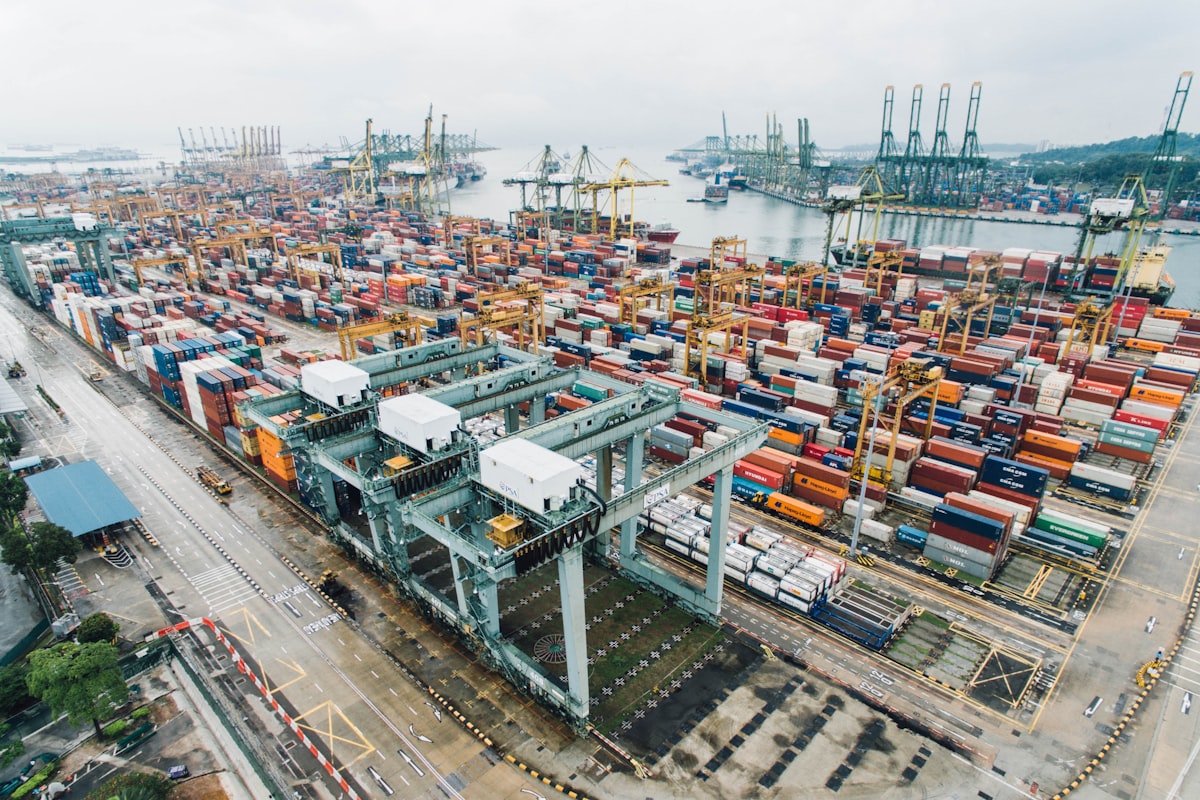
A freight forwarder arranges the transportation of your goods from your factory in Taiwan to Amazon's fulfillment center in the US. They book ocean or air freight, coordinate pickup, handle export customs documentation in Taiwan, arrange US customs clearance (through a US customs broker — often a subsidiary or partner), and deliver to Amazon's facility.
What a forwarder does not do: they are not your importer of record (unless you specifically contract this), they do not verify your products meet Amazon's prep requirements, and they do not manage the Amazon shipment plan in Seller Central. You remain responsible for FNSKU labeling, creating the FBA shipment in Seller Central, and providing the delivery appointment booking link to Amazon's facility.
Two types of logistics providers: NVOCCs (Non-Vessel Operating Common Carriers) who book space on ocean carriers and issue their own bill of lading, and freight brokers who arrange space on behalf of their customers without issuing their own bills. NVOCCs typically have more stable pricing; brokers may have better spot-rate access. For regular FBA shipments, an NVOCC with Amazon FBA experience is preferred.
Incoterms: DDP vs DAP and Why It Matters
Incoterms (International Commercial Terms) define who bears responsibility and cost at each stage of shipment. Two terms are most relevant for Taiwan-to-Amazon FBA shipments:
DDP (Delivered Duty Paid): the forwarder/exporter is responsible for all costs and risks through delivery to Amazon's door — including US customs duties, ISF filing, US customs clearance, and final-mile delivery. You pay one all-inclusive price. Risk: if the forwarder's US customs handling is incorrect, you may still have compliance liability even though they handled it.
DAP (Delivered At Place, formerly DDU): you pay up to arrival at the US port. From there, you (or your designated US customs broker) handle customs clearance, pay duties, and arrange final delivery to Amazon. More moving parts but gives you direct control over the customs process and choice of US customs broker.
For new sellers shipping first containers, DDP is often simpler — one point of contact, all-in pricing. For experienced sellers with established US customs broker relationships, DAP with your preferred broker provides more control. Always confirm: does the quoted DDP price include all US duties and taxes? Some forwarders quote "DDP" but exclude Section 301 tariffs — get this clarified in writing.
Questions to Ask Before Selecting a Forwarder
Question 1: "Do you have experience shipping to Amazon FBA fulfillment centers?" Amazon has specific appointment booking systems (FIND/Carrier Appointment Request), pallet requirements, and receiving procedures. A forwarder that has never shipped to Amazon will encounter these requirements for the first time with your goods — at your cost. Ask for reference accounts and shipping history with Amazon FBA.
Question 2: "Can you handle ISF filing?" US Customs requires an Importer Security Filing (ISF, also called "10+2") to be submitted electronically at least 24 hours before cargo is loaded onto the vessel in Taiwan. Failure to file ISF results in CBP penalties of up to $5,000 per violation. Confirm your forwarder files ISF as a standard service.
Question 3: "What are your all-in charges?" Get an itemized quote covering: ocean freight, origin charges (export documentation, port handling, container stuffing), destination charges (port handling, customs clearance, drayage, final delivery). "All-in" quotes that exclude destination charges are common and misleading — destination charges can add $300–600 per container.
Question 4: "What is your process if Amazon rejects the delivery appointment?" Amazon's warehouses can deny entry for various reasons (appointment system errors, facility capacity issues). A good forwarder has a protocol for rebooking without incurring demurrage or detention. Ask how they have handled this previously.
Port Selection and Transit Times from Taiwan
Main Taiwan departure ports: Kaohsiung (southern Taiwan) and Taichung (central Taiwan). Kaohsiung has more direct services to US West Coast ports. Taichung is convenient for manufacturers in the Taichung-Changhua-Nantou corridor.
US destination ports for Amazon FBA: Amazon distributes inventory among multiple fulfillment centers based on your shipment plan. Typical ports used for Taiwan-origin shipments: Los Angeles / Long Beach (most common for West Coast FBA facilities), Seattle / Tacoma (for Pacific Northwest facilities), and East Coast ports (Savannah, Norfolk, New York) for East Coast Amazon centers.
Transit time estimates (door to Amazon FC): sea freight ocean transit from Kaohsiung to LA/Long Beach: 14–18 days. Port handling, customs clearance, and drayage: 7–14 additional days. Total door-to-FC: approximately 21–32 days under normal conditions. Air freight: 3–5 days transit, but 5–8x the cost of ocean. Budget sea freight transit into your replenishment timeline.
Frequently Asked Questions
Should I use a Taiwan-based or US-based freight forwarder?
Many Taiwan forwarders have both Taiwan and US offices (or US partners) and handle the complete Taiwan-to-Amazon journey. Using a single provider with presence at both ends simplifies communication and accountability. If using separate Taiwan export and US import brokers, ensure both are explicitly briefed on Amazon FBA-specific requirements — especially the delivery appointment process and FNSKU label verification.
What is the typical cost of shipping a 20ft container from Taiwan to Amazon FBA?
Ocean freight rates fluctuate significantly based on market conditions. As a reference, a 20ft FCL (Full Container Load) from Kaohsiung to LA/Long Beach might range from $1,200–$4,000+ depending on the market cycle (rates spiked to $10,000+ during 2021–2022 COVID disruptions and returned to normalized ranges in 2023–2024). LCL (Less than Container Load) rates are typically quoted per cubic meter. Always get current quotes from 3 forwarders — do not rely on historical rates.
Can I ship directly from the manufacturer to Amazon FBA without a US warehouse?
Yes, with correct documentation and prep. Your manufacturer applies FNSKU labels and prepares products to Amazon's standards. The freight forwarder handles export from Taiwan, US customs clearance, and final delivery directly to the Amazon FC. This "factory to FBA" model eliminates US warehousing costs but requires that your manufacturer is reliable on prep quality. Many Taiwan factories shipping to Amazon can do this — it's worth confirming capability before first shipment.
Sources & References
- —US CBP — Importer Security Filing (ISF) Requirements
- —Incoterms 2020 — ICC Official Guide
- —Amazon Seller Central — Shipping to Amazon FBA Requirements
- —Flexport — Taiwan to US Freight Market Report
Ready to Enter the US Market?
We turn great products into global sales. Contact us today.
START PARTNERSHIP →
