
LNH31.
Cross-border trade · B2B · Amazon
Operations9 min read·
How to Optimize Warehouse Pick-Pack-Ship Processes for Cross-Border E-Commerce
A practical guide to optimizing warehouse pick-pack-ship workflows for cross-border e-commerce sellers, covering pick strategies, pack station layout, carrier rate negotiation, and performance KPIs.
warehouse pick pack ship optimizationecommerce fulfillment process improvementpick pack ship efficiency
Pick Strategy Selection: Wave, Batch, and Zone Picking
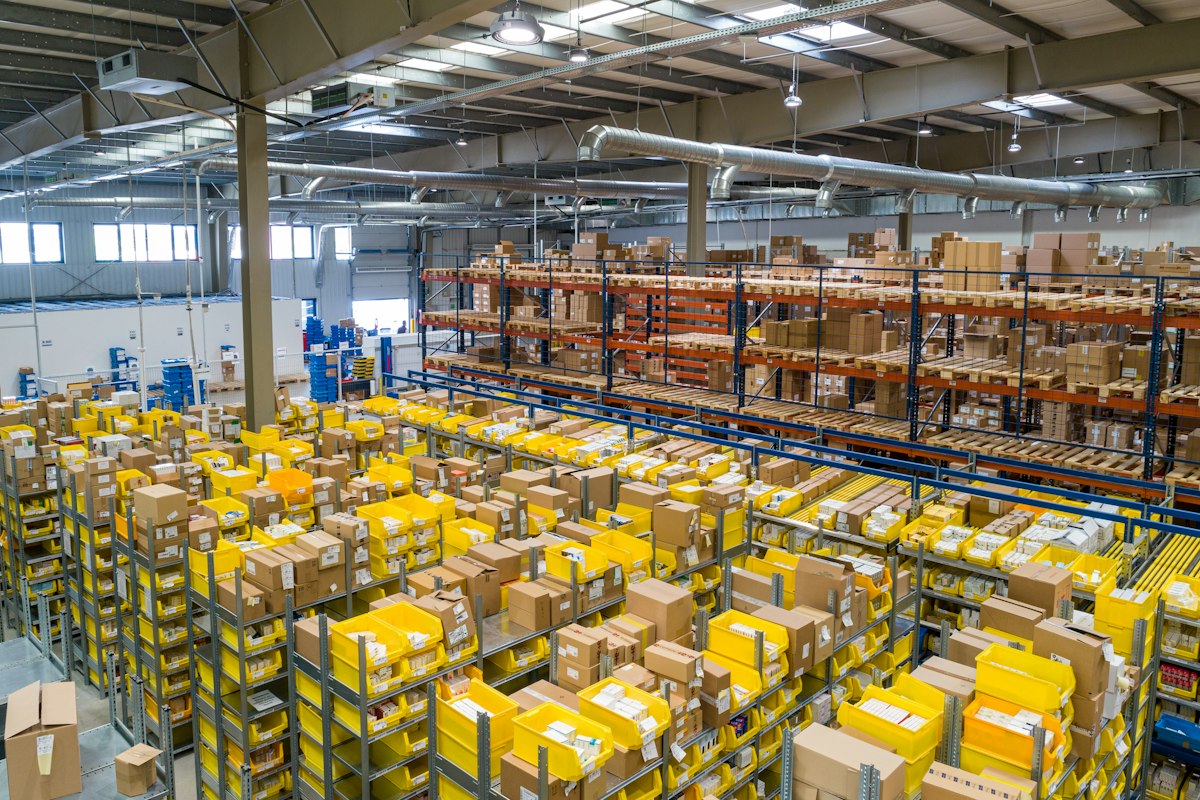
Pick strategy selection is the foundational warehouse optimization decision for cross-border e-commerce sellers operating 3PL or owned warehouse facilities. The three dominant pick strategies are wave picking (releasing groups of orders at scheduled intervals, with pickers completing a defined wave before the next wave is released), batch picking (assigning a picker multiple orders simultaneously, collecting items for all orders in a single warehouse walk), and zone picking (dividing the warehouse into zones with dedicated pickers per zone, routing orders through sequential zones for item collection). The optimal strategy depends on order volume, SKU count, warehouse size, and order complexity.
Batch picking reduces picker travel distance (the primary variable cost in warehouse operations) by 40 to 60 percent compared to single-order picking for warehouses with 200 to 2,000 daily orders and 50 to 500 SKUs. A Taiwan health supplement 3PL warehouse with 500 daily orders across 80 SKUs achieves optimal batch picking with batches of 8 to 12 orders per picker run, using a sortation cart with order-labeled totes. The batch size calculation balances travel distance reduction against the time cost of sorting items at the pack station: batches larger than 12 to 15 orders create sorting complexity that exceeds the travel-distance saving. Implement batch picking through your warehouse management system (WMS) using the order-batch optimization algorithm in systems such as ShipBob, ShipStation, or 3PL Central.
Zone picking is optimal for warehouses with 5,000 to 50,000 daily orders and 500+ SKUs, where a single picker cannot efficiently cover the entire warehouse in one pass. In zone picking, the warehouse is divided into 3 to 8 zones based on SKU velocity: high-velocity SKUs are placed in Zone A (nearest the pack station), medium-velocity SKUs in Zone B, and slow-velocity SKUs in Zone C and beyond. Orders are transported between zones via conveyor (for high-volume operations) or by "pick-and-pass" carts (for medium-volume operations). The primary KPI for zone picking effectiveness is "zone pick imbalance": the coefficient of variation in picker utilization across zones. A coefficient of variation below 0.25 (meaning no zone has a utilization more than 25 percent above or below the average) indicates a well-balanced zone design.
For Taiwan cross-border e-commerce sellers using a US 3PL partner (such as ShipBob, Whiplash, or Rakuten Super Logistics), pick strategy selection is determined by the 3PL's own WMS, not by the seller. However, understanding the 3PL's pick strategy is important for SKU placement decisions: provide high-velocity SKUs (those representing 80 percent of your order volume) to your 3PL labeled as "A-slot" or "hot zone" items to ensure they are placed in the most accessible storage locations. Taiwan sellers whose 3PL uses a first-in-first-out (FIFO) pick strategy (important for expiry-dated supplement products) should confirm in their 3PL contract that FIFO is enforced at the lot level, with specific procedures for identifying and prioritizing near-expiry inventory.
Pack Station Layout and Materials
An optimized pack station reduces the time from item collection to sealed, labeled, and sorted outbound package. The standard pack station layout for a cross-border e-commerce supplements brand should include: 1.8m to 2.4m work surface at standing height (890mm to 940mm), with the shipping label printer at the left side (or right side for left-handed operators), scale at the right side, packing material (void fill, tissue paper, inserts) in a dispenser below the work surface, carton sealer tape gun on a holder at the edge of the work surface, and a QC barcode scanner for scanning product barcodes against the order manifest before packing. Pack station cycle time for a single-SKU order should be 45 to 90 seconds; for a 3-SKU multi-item order, 90 to 180 seconds.
Packing material selection for cross-border e-commerce shipments must balance cost, protection, and sustainability. Void fill options for supplement and health product boxes include: air pillows (cost USD 0.08 to USD 0.15 per cubic foot, fast to apply, effective cushioning for impact protection), crinkle paper fill (cost USD 0.12 to USD 0.20 per cubic foot, sustainable, slower to apply but better consumer brand experience), and recycled paper fill (comparable cost to crinkle paper, fastest to apply with automated paper fill dispensers such as the Ranpak FillPak or Sealed Air Instapak system). The choice between these options depends on your brand's consumer experience priorities: premium health brands should use crinkle paper or tissue paper to match the unboxing experience premium consumers expect, while value-positioned brands can use air pillows efficiently.
Shipping carton size standardization is one of the highest-ROI pack station optimizations. Taiwan cross-border e-commerce sellers who use many carton sizes to "right-size" every order may achieve lower dimensional weight charges per shipment but create operational inefficiency: pickers must select the correct carton size for each order, packers must cut down oversize cartons, and the carton inventory management adds cost and complexity. Standardize to 3 to 5 carton sizes that cover 90 percent of your order volume with acceptable dimensional weight waste. A health supplement seller with average orders of 1 to 3 bottles should standardize on: a small box (150x150x100mm for 1-bottle orders), a medium box (200x150x120mm for 2 to 3 bottle orders), and a padded mailer (for single flat-product orders). Using these 3 formats covers 95 percent of orders with dimensional weight waste of less than 15 percent above the optimal carton size.
Customs documentation generation is a pack station step that Taiwan cross-border sellers often handle inefficiently. For each international shipment, a commercial invoice, packing list, and, for certain countries (Japan, Australia), additional certificate of compliance or FDA Prior Notice documentation must be generated and included in the shipment. Integrating your order management system (OMS) with a shipping platform (Shippo, EasyPost, or Pirateship for US outbound) that auto-generates and auto-populates customs documents from the order data eliminates manual customs form completion and reduces customs document error rates from 8 to 12 percent (manual) to 0.5 to 1 percent (automated). Budget USD 2,000 to USD 5,000 for OMS-shipping platform integration development and testing.
Shipping Carrier Rate Negotiation
Carrier rate negotiation for Taiwan cross-border e-commerce sellers is achievable at monthly shipping volumes as low as 200 to 300 international parcels. The primary leverage points in carrier negotiation are: volume commitment (guaranteed minimum monthly parcel count), zone concentration (if most of your shipments go to the same 2 to 3 destination zones, carriers can offer zone-specific discounts), average parcel weight (carriers prefer heavier packages that generate more revenue per handling event), and contract term (longer contract commitments generate better rates). For US-outbound parcels, FedEx, UPS, and DHL all offer direct account pricing with 20 to 40 percent discounts versus published rates for sellers shipping 200 to 500 parcels per month.
For Taiwan-to-US cross-border shipments, the primary carrier options and their approximate 2025 rate benchmarks for a 0.5 kg standard-size parcel (example: 60-capsule supplement bottle) to a US residential address are: DHL Express Worldwide USD 28 to USD 35 (3 to 5 day transit), FedEx International Priority USD 32 to USD 42 (2 to 3 day transit), UPS Worldwide Express USD 30 to USD 38 (2 to 3 day transit), and EMS (Taiwan Post International Express Mail) USD 12 to USD 18 (5 to 10 day transit, slower but more cost-effective for less time-sensitive shipments). At 500 monthly Taiwan-to-US shipments, negotiating a DHL Express account at 25 percent below published rates saves approximately USD 5 to USD 7 per shipment, or USD 2,500 to USD 3,500 per month.
Dimensional weight (DIM weight) calculation is a significant cost variable for light but bulky supplement and cosmetics products. Carriers calculate freight charges as the greater of actual weight or dimensional weight, where DIM weight = (length x width x height in inches) / DIM factor (139 for international DHL and FedEx, 166 for domestic US UPS). A supplement bottle box measuring 10 x 7 x 5 inches and weighing 0.45 kg has a DIM weight of (10 x 7 x 5) / 139 = 2.52 lbs = 1.14 kg, making the chargeable weight 1.14 kg versus the actual 0.45 kg. Reducing the packaging dimensions by even 15 percent (to 9 x 6 x 5 inches) reduces DIM weight to (9 x 6 x 5) / 139 = 1.94 lbs = 0.88 kg. At USD 9 per kg for Taiwan-US DHL, this packaging size reduction saves USD 2.34 per shipment, or USD 1,170 per month at 500 monthly shipments.
Third-party logistics rate auditing services automatically review carrier invoices for billing errors and overcharges. Shipping carriers make billing errors in approximately 3 to 5 percent of invoices, including overcharges for incorrect dimensional weight calculations, wrong zone assignments, and misapplied fuel surcharge rates. Services such as Shipware, 71lbs, or Refund Retriever audit your carrier invoices and file refund claims on your behalf, charging a contingency fee of 50 percent of the refund amount (meaning you pay nothing unless refunds are recovered). Taiwan cross-border e-commerce sellers shipping 200+ parcels per month typically recover USD 500 to USD 2,500 per month through carrier invoice auditing, making this a high-ROI service to engage from the outset of US market entry operations.
KPIs and Continuous Improvement for Warehouse Operations
The 5 most important warehouse KPIs for Taiwan cross-border e-commerce fulfillment operations are: (1) Order accuracy rate (number of orders shipped with correct items and quantities divided by total orders shipped, target: 99.8 percent or above); (2) On-time ship rate (orders shipped on or before the promised ship date as a percentage of total orders, target: 99 percent or above); (3) Pick rate (units picked per person-hour, benchmark: 80 to 120 units per person-hour for standard supplement products with batch picking); (4) Cost per order (total warehouse labor plus materials plus carrier cost divided by total orders, benchmark: USD 3.50 to USD 7.50 per order for standard supplement D2C fulfillment); and (5) Return rate by SKU (number of units returned divided by units shipped by SKU, alert threshold: above 3 percent for physical products).
Order accuracy rate below 99.8 percent is the single most expensive fulfillment KPI failure: each mis-shipped order costs an average USD 12 to USD 28 in direct costs (return shipping, replacement order shipping, customer service time) plus indirect costs in customer lifetime value reduction and negative review risk. Root causes of order accuracy failures in supplement 3PL environments include: similar-looking packaging SKUs (for example, 60-capsule vs 120-capsule versions of the same product stored adjacent to each other), unlabeled or mis-labeled pick locations, and insufficient barcode scan verification at the pack station. Implement a "scan-to-verify" pack station procedure where every item is scanned against the order manifest before packing, reducing accuracy failures by 70 to 85 percent versus visual-check-only procedures.
Continuous improvement in warehouse operations for Taiwan cross-border e-commerce should follow a monthly review cadence. Monthly reviews should analyze: the top 5 causes of order accuracy failures (from customer complaints and 3PL error logs), carrier surcharge trends (reviewing whether DIM weight fees, residential surcharges, or fuel surcharge rate changes have materially affected cost per order), peak-day capacity analysis (comparing throughput on the highest-volume shipping day against the 3PL's contracted capacity commitment), and SKU velocity analysis (identifying which SKUs have increased or decreased velocity by more than 20 percent versus the prior 30 days, which signals potential inventory imbalances).
Automation investment decisions for warehouse operations are driven by volume thresholds. For Taiwan cross-border e-commerce sellers with fewer than 500 daily orders, manual pick-pack-ship with a well-designed batch-picking process and optimized pack stations is more cost-effective than automation. At 500 to 2,000 daily orders, a semi-automated solution such as a conveyor-based sortation system (investment: USD 40,000 to USD 120,000) or an automated carton erector (investment: USD 15,000 to USD 35,000) provides ROI with a payback period of 12 to 24 months. At over 2,000 daily orders, automated storage and retrieval systems (AS/RS) with robot-assisted picking (investment: USD 500,000 to USD 2,000,000) provide both labor cost reduction and accuracy improvements that justify the capital expenditure within 3 to 5 years.
Frequently Asked Questions
What pick strategy is best for a Taiwan supplement brand using a US 3PL?
For Taiwan supplement brands with 50 to 500 daily orders through a US 3PL, batch picking (assigning a picker 8 to 12 orders per batch) is the most efficient strategy. Discuss your SKU count and average order profile with your 3PL to confirm their WMS supports batch optimization. Request that your top 20 percent highest-velocity SKUs be assigned to A-slot storage positions (nearest the pack station) to minimize picker travel distance for your highest-frequency picks. For supplement brands with expiry-dated inventory, confirm that your 3PL enforces FIFO (first in, first out) at the lot level, not just at the SKU level.
How can I reduce dimensional weight charges on Taiwan-to-US shipments?
Reduce packaging dimensions to the minimum that safely protects the product. A 10 percent reduction in packaging volume typically reduces DIM weight by 10 percent, saving USD 0.50 to USD 2.00 per shipment depending on the carrier and route. DIM weight is calculated as (L x W x H in inches) / 139 for DHL and FedEx international. Measure your current packaging DIM weight versus actual weight for your top 5 shipping SKUs. If DIM weight exceeds actual weight by more than 50 percent, invest in a packaging redesign: a tighter-fitting retail box or a poly mailer for products that do not require rigid outer packaging can eliminate DIM weight surcharges entirely for flat or semi-rigid products.
What order accuracy rate should a Taiwan cross-border e-commerce brand target?
99.8 percent or above. At 99.8 percent accuracy, 2 in 1,000 orders contain an error. For a brand shipping 1,000 orders per month, this means 2 mis-shipped orders costing approximately USD 24 to USD 56 in direct costs monthly. Below 99.5 percent accuracy (5 errors per 1,000 orders), the cost of mis-ships plus negative reviews begins to materially affect contribution margin and customer lifetime value. Implement a scan-to-verify process at the pack station (scanning each item against the order manifest before packing) to achieve 99.8 percent or above accuracy. Most WMS platforms support scan-to-verify without additional cost.
Sources & References
- —Warehousing Education and Research Council (WERC), Warehouse Operations Benchmark Report 2025, werc.org
- —MHI (Material Handling Institute), Automation Decision Framework, mhi.org
- —ShipBob, 3PL Fulfillment Metrics Benchmarks 2025, shipbob.com
- —DHL Express, Taiwan International Shipping Rates, dhl.com
- —ISTA, Protective Packaging Design Standards, ista.org
Ready to Enter the US Market?
We turn great products into global sales. Contact us today.
Start a partnershipMore Articles
View All →

Cross-Border Trade
How Trade Shows Generate Export Leads: A Practical Guide for Taiwan Brands
8 min read