
LNH31.
Cross-border trade · B2B · Amazon
Operations12·
International Product Certification Testing Timelines: Planning for US, AU, and JP Markets
Detailed certification testing timeline guide for US, Australia, and Japan markets, covering FDA, FCC, UL, TGA, ACMA, PSE, Giteki, and JIS certifications with parallel planning strategies and lab selection.
product certification timelineFCC certification timelineTGA approval timelinePSE certification japanmulti-market certification
Why Certification Timelines Are Critical for Multi-Market Launch Planning
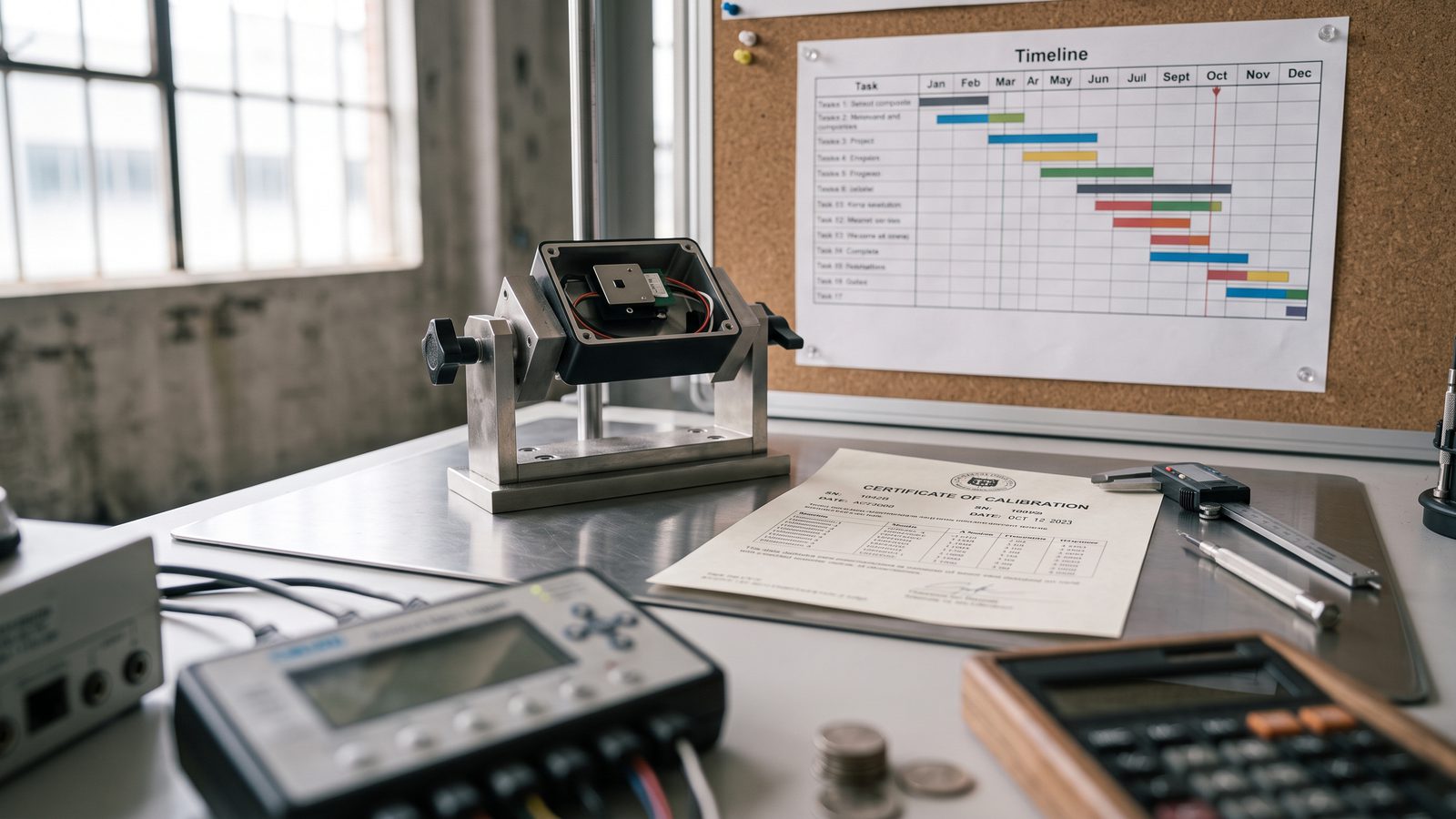
Product certification is consistently the longest lead-time item in a cross-border product launch, yet it is one of the most frequently underestimated by Taiwan exporters planning their first international market entry. A consumer electronics product targeting simultaneous launch in the US, Australia, and Japan may require FCC certification (6 to 10 weeks), UL safety certification (8 to 16 weeks), FDA registration (4 to 12 weeks), ACMA/RCM compliance (4 to 8 weeks), TGA registration (3 to 18 months if classified as a medical device), PSE safety mark (8 to 14 weeks), and Giteki radio certification (4 to 8 weeks). If these certifications are pursued sequentially, the total timeline can exceed 12 months; with strategic parallel planning, it can be compressed to 3 to 5 months.
The cost of certification delays extends far beyond the testing fees themselves. Each week of launch delay represents lost revenue in the target market, increased inventory carrying costs for finished goods waiting for certification clearance, potential loss of seasonal selling windows (missing the Q4 holiday season in the US can mean waiting an entire year), and the risk that competitors will establish market position before your product is available. For a product with projected first-year sales of USD 500,000 per market, a three-month certification delay represents approximately USD 375,000 in deferred revenue across three markets, not including the competitive positioning costs.
Certification testing timelines vary not only by certification type but also by the testing laboratory's current workload, the product's complexity and number of test configurations, the completeness of the initial application documentation, and whether the product passes all tests on the first attempt or requires remediation and retesting. The timelines presented in this guide represent typical ranges based on data from Taiwan exporters working through major international testing laboratories. Products at the simpler end of each category (single-function, single-SKU, well-documented) will generally complete at the shorter end of the range, while complex products (multi-function, multi-SKU, requiring design modifications) will trend toward the longer end.
Taiwan manufacturers with strong engineering teams and well-documented product specifications can compress certification timelines by investing in pre-compliance testing and application preparation before engaging the formal certification process. Pre-compliance testing using in-house or third-party EMC chambers, safety labs, and RF test equipment can identify potential failures before the official test program begins, allowing design corrections to be made without incurring retesting fees at the certification laboratory. Application preparation, including assembling complete technical files, test sample preparation, and advance engagement with the certification body, can eliminate 2 to 4 weeks of back-and-forth that typically occurs during the application review phase.
This guide provides specific timelines, costs, and strategies for each major certification across the US, Australian, and Japanese markets, organized to help Taiwan exporters build a comprehensive certification project plan that minimizes total time-to-market while managing costs and engineering resources effectively.
US Market Certifications: FDA, FCC, and UL
FDA registration and compliance timelines vary dramatically depending on the product category. For general food products, FDA Food Facility Registration (FFR) and Prior Notice filing can be completed in 2 to 4 weeks, with no pre-market approval required for most conventional food products. For dietary supplements, no pre-market approval is needed, but the manufacturing facility must comply with 21 CFR Part 111 (cGMP for dietary supplements), and new dietary ingredient (NDI) notifications, if applicable, require 75 days advance filing. For OTC drugs, establishment registration takes 2 to 4 weeks, but cGMP compliance under 21 CFR Part 211 may require 3 to 6 months of facility preparation if the Taiwan manufacturer is not already FDA-compliant. For medical devices, 510(k) premarket notification clearance takes 3 to 12 months, while PMA (premarket approval) for Class III devices takes 12 to 24 months.
FCC certification for products containing radio frequency (RF) emitters or digital electronics typically takes 6 to 10 weeks from sample submission to grant of certification. The process involves selecting an FCC-accredited Telecommunication Certification Body (TCB), preparing the FCC application with required technical documentation (schematics, block diagrams, test setup photos, operational description), submitting test samples (typically 2 to 3 units), conducting EMC and RF testing per FCC Part 15 (intentional radiators), Part 15B (unintentional radiators), or Part 18 (ISM equipment), and receiving the FCC grant after review and publication. Testing costs range from USD 3,000 to USD 12,000 depending on the number of RF technologies and test configurations. TCBs with offices in Taiwan include UL (formerly UL-CCIC), TUV Rheinland, and Intertek, all of which can process FCC applications from their Taiwan facilities.
UL safety certification (or ETL/CSA as alternatives) for electrical and electronic products takes 8 to 16 weeks and involves the most comprehensive testing program of any US certification. The process includes application and quote preparation (1 to 2 weeks), test sample submission and initial review (1 to 2 weeks), safety testing per the applicable UL standard (4 to 8 weeks), evaluation report preparation (1 to 2 weeks), and factory inspection at the Taiwan manufacturing facility (1 to 2 weeks, can be concurrent with testing). Total testing costs range from USD 8,000 to USD 25,000 for the initial certification plus USD 2,000 to USD 5,000 per year for follow-up factory inspections. Products that require multiple UL standards (e.g., UL 62368-1 for audio/video equipment plus UL 2054 for lithium batteries) will trend toward the higher end of both the timeline and cost ranges.
For products that require all three US certifications (FDA + FCC + UL), the most efficient approach is to begin UL safety testing first (as it has the longest timeline), initiate FCC testing concurrently using a separate set of test samples, and complete FDA registration in parallel with the testing programs. This parallel approach can compress the total US certification timeline from 20+ weeks (sequential) to 10 to 16 weeks. However, it requires having sufficient test samples available simultaneously and engineering resources to manage multiple certification programs concurrently.
Cost planning for US market certifications should budget USD 15,000 to USD 45,000 for initial certification of a typical consumer electronics product (covering FCC + UL + any applicable FDA requirements), plus USD 3,000 to USD 8,000 per year for ongoing compliance maintenance (UL factory inspections, FCC holder obligations, FDA registration renewals). Products in regulated categories (medical devices, OTC drugs, children's products requiring CPSIA testing) should budget an additional USD 5,000 to USD 50,000 depending on the regulatory pathway.
Australia Market Certifications: TGA, ACMA, and Product Safety
TGA (Therapeutic Goods Administration) timelines are the most variable of any Australian certification and depend entirely on the product's risk classification. Listed medicines (AUST L), which include most complementary and over-the-counter health products, can be listed through the TGA's e-Business Services portal in 3 to 6 weeks if all documentation is complete. Assessed Listed medicines, which undergo TGA scientific evaluation of clinical evidence, take 6 to 12 months. Registered medicines (AUST R), including prescription drugs and higher-risk OTC products, require 12 to 18 months for a new application. Medical devices follow a separate framework: Class I devices can be included on the ARTG in 4 to 6 weeks, while Class IIa and IIb devices require third-party conformity assessment and take 6 to 12 months, and Class III devices take 12 to 18 months.
ACMA/RCM compliance for electrical and electronic products typically takes 4 to 8 weeks and is based on a supplier self-declaration model (no government pre-approval required). The timeline includes identifying applicable Australian standards (1 week), conducting EMC testing to AS/NZS CISPR 32 or other applicable standards (2 to 4 weeks), preparing electrical safety documentation per AS/NZS 3820 or AS/NZS 60950/62368 (1 to 2 weeks), and preparing the Supplier Declaration of Conformity and compliance folder (1 week). If testing is performed at a Taiwan-based NATA or ILAC MRA-accredited laboratory, no additional Australian testing is required. The total cost for ACMA/RCM compliance ranges from USD 2,500 to USD 8,000 depending on product complexity.
Australian product safety certification for specific product categories follows separate pathways. Electrical products must comply with the relevant AS/NZS safety standard and carry the RCM mark, with electrical safety testing taking 4 to 8 weeks at an accredited laboratory. Children's products must comply with mandatory safety standards including AS/NZS 8124 (toy safety) and AS/NZS 2088 (children's furniture), with testing taking 3 to 6 weeks. Food products require compliance with the Australia New Zealand Food Standards Code, which involves food testing, labeling review, and importer registration taking 4 to 8 weeks total. Cosmetics must be listed with the National Industrial Chemicals Notification and Assessment Scheme (NICNAS, now AICIS) and comply with the Poisons Standard, with the process taking 4 to 12 weeks.
For Taiwan exporters targeting the Australian market with multiple product categories, the recommended approach is to begin TGA processes first (as they have the longest timelines), initiate ACMA/RCM compliance concurrently for any electrical or electronic products, and handle food or cosmetic compliance in parallel. The total Australia certification timeline for a typical consumer goods portfolio can be compressed to 6 to 12 weeks for non-therapeutic products or 6 to 18 months for products requiring TGA registration. Budget USD 5,000 to USD 15,000 for non-therapeutic product compliance and USD 15,000 to USD 80,000 for TGA-regulated products depending on the classification level.
Australia-specific considerations for Taiwan exporters include the 2-hour time difference between Taiwan and eastern Australia (minimizing communication delays), the availability of Australian-standard testing at Taiwan-based international laboratories (SGS, Intertek, TUV, Bureau Veritas), and the mutual recognition of test reports from ILAC MRA member accreditation bodies (including TAF in Taiwan). These factors make Australian certification relatively efficient for Taiwan-based companies compared to more distant or less test-infrastructure-developed markets.
Japan Market Certifications: PSE, Giteki, JIS, and Parallel Planning Strategies
PSE (Product Safety of Electrical Appliances and Materials) certification is mandatory for electrical products sold in Japan and is administered by the Ministry of Economy, Trade and Industry (METI). The PSE mark comes in two categories: the Diamond PSE (for designated products with high safety risk, such as lithium batteries, power supplies, and chargers) and the Round PSE (for non-designated products with lower safety risk, such as LED lighting and audio equipment). Diamond PSE certification requires third-party testing by a METI-registered Conformity Assessment Body (CAB) and takes 8 to 14 weeks, including application review (1 to 2 weeks), safety testing per the applicable JIS or IEC standard (4 to 8 weeks), factory inspection (1 to 2 weeks), and certificate issuance (1 to 2 weeks). Testing costs range from USD 5,000 to USD 15,000. Round PSE certification can be based on self-declaration with third-party test reports, taking 4 to 8 weeks at a cost of USD 2,500 to USD 8,000.
Giteki (Radio Law) certification for wireless products takes 4 to 8 weeks through a Registered Certification Body such as TELEC or TTC. As detailed in the separate Giteki certification guide, costs range from JPY 250,000 to JPY 2,500,000 (USD 1,700 to USD 17,100) depending on the number and complexity of radio technologies in the product. Products requiring both PSE and Giteki certification should plan for parallel testing programs, as the test samples and documentation requirements are different. PSE testing focuses on electrical safety (insulation, grounding, temperature rise, mechanical strength), while Giteki testing focuses on radio performance (transmit power, spurious emissions, frequency accuracy).
JIS (Japanese Industrial Standards) certification is voluntary but highly valued in the Japanese market and is often required by major retailers and institutional buyers. JIS certification is administered by the Japanese Standards Association (JSA) and requires testing by a METI-designated testing laboratory, conformity of the quality management system to ISO 9001 or equivalent, and a factory inspection by the designated testing laboratory. The JIS certification process takes 4 to 12 months from initial application to mark authorization, with costs of USD 10,000 to USD 30,000 including testing, inspection, and annual renewal fees. While JIS certification is not legally required for most products, it provides a significant competitive advantage in the Japanese market and can accelerate buyer acceptance.
Parallel planning across all three markets is the most effective strategy for Taiwan exporters launching simultaneously in the US, Australia, and Japan. The recommended sequence is: Month 1-2: Submit samples for UL/ETL safety testing (US) and PSE testing (Japan) simultaneously, as both programs are based on similar IEC safety standards and test failures in one program often predict failures in the other. Month 1-3: Submit samples for FCC (US) and Giteki (Japan) radio testing simultaneously, using separate test sample sets but coordinating documentation to leverage common technical data. Month 2-3: Initiate ACMA/RCM compliance (Australia) using test reports from the US/Japan programs where applicable under mutual recognition arrangements. Month 3-4: Complete FDA registration (US) and TGA listing (Australia) in parallel, both of which are primarily documentation-based processes.
Multi-market certification budget planning should account for potential retesting costs, which occur in approximately 25 to 35 percent of first-time certification programs. A prudent budget includes a 20 to 30 percent contingency above the base testing costs. For a typical consumer electronics product (WiFi/Bluetooth enabled, AC-powered, consumer safety classification), the total three-market certification budget ranges from USD 30,000 to USD 70,000, including testing fees (USD 20,000 to USD 45,000), documentation and consulting (USD 3,000 to USD 8,000), factory inspections (USD 3,000 to USD 7,000), and contingency for retesting (USD 4,000 to USD 10,000). Selecting a single international testing laboratory (such as UL, SGS, TUV, or Intertek) that can manage certifications across all three markets from its Taiwan office provides efficiency gains of 15 to 25 percent in both cost and timeline compared to using separate laboratories for each market.
Frequently Asked Questions
Can I use the same test reports for certifications in multiple countries?
Partially. Test reports from laboratories accredited under the ILAC MRA are generally accepted across countries, but each certification body may require reports to reference the specific national standard (AS/NZS, JIS, etc.) rather than only the international IEC standard. FCC and ACMA testing can often share EMC test data when performed to the same underlying CISPR standards. UL and PSE testing share the same IEC safety standards but may have country-specific deviations that require additional testing. Work with a testing laboratory that can produce multi-standard reports covering all target markets from a single test program.
What is the fastest way to get products certified for all three markets?
Run UL safety and PSE safety testing in parallel from Month 1 (both are based on similar IEC standards), run FCC and Giteki radio testing in parallel from Month 1 to 2 (separate test sets), initiate ACMA compliance from Month 2 using existing test data where applicable, and complete FDA and TGA registration in parallel from Month 3. This compresses the total three-market timeline from 12+ months (sequential) to 3 to 5 months. Use a single international lab (UL, SGS, TUV, or Intertek) with Taiwan operations to coordinate all programs.
What happens if a product fails certification testing?
A test failure adds 2 to 6 weeks to the timeline depending on the severity of the failure and the required design modification. Common failures include excessive EMC emissions (requiring EMI filter modifications), insufficient insulation clearance (requiring PCB layout changes), and antenna performance outside permitted limits (requiring antenna redesign). Pre-compliance testing before formal submission reduces failure risk by approximately 70 percent. Budget 20 to 30 percent contingency in both timeline and costs for potential retesting. Most testing labs offer a reduced retesting fee (50 to 70 percent of original) for the specific failed tests only.
How much should I budget for three-market certification of a consumer electronics product?
Budget USD 30,000 to USD 70,000 total for a typical WiFi/Bluetooth consumer electronics product targeting the US, Australia, and Japan. This includes testing fees (USD 20,000 to USD 45,000), documentation and consulting (USD 3,000 to USD 8,000), factory inspections (USD 3,000 to USD 7,000), and a 20 to 30 percent retesting contingency (USD 4,000 to USD 10,000). Annual maintenance costs are approximately USD 5,000 to USD 12,000 for factory inspections, registration renewals, and standard updates across all three markets.
Sources & References
- —UL Solutions -- Global Market Access Certification Timeline Database 2026
- —Federal Communications Commission -- Equipment Authorization Process and TCB Program Guide 2025
- —Therapeutic Goods Administration -- Device Classification and Application Pathway Timelines 2025
- —Ministry of Economy, Trade and Industry (METI) -- PSE Certification Process and Designated Product List 2026
Ready to Enter the US Market?
We turn great products into global sales. Contact us today.
Start a partnershipMore Articles
View All →

Cross-Border Trade
How Trade Shows Generate Export Leads: A Practical Guide for Taiwan Brands
8 min read