
LNH31.
Cross-border trade · B2B · Amazon
Operations9 min read·
Freight Consolidation and Shipment Planning for Multi-Market Sellers
A strategy guide for Taiwan multi-market sellers on freight consolidation types, shipment planning cadence, cost savings modeling, and selecting the right freight consolidation partner.
freight consolidation strategyshipment planning multi marketconsolidation shipping cost savings
Consolidation Types: Buyer, Origin, and Destination
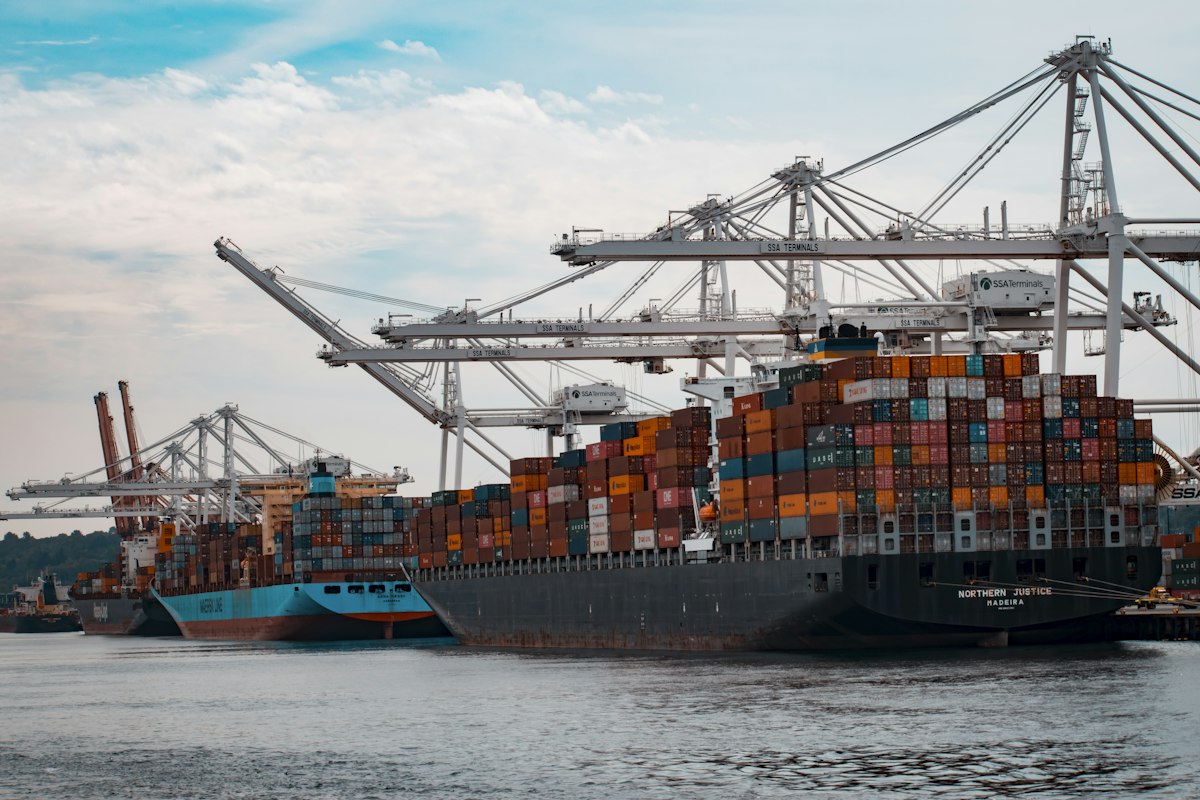
Freight consolidation is the practice of combining multiple smaller shipments into a single larger shipment to achieve better per-unit freight rates and reduce administrative complexity. For Taiwan multi-market exporters, consolidation operates at three points in the supply chain: buyer consolidation (multiple purchase orders from the same buyer consolidated into one shipment), origin consolidation (multiple sellers' goods consolidated at a Taiwan consolidation point before departure), and destination consolidation (goods for multiple consignees at the destination consolidated and deconsolidated). Understanding the difference between these consolidation types and when each is appropriate for your specific shipping lanes allows Taiwan brands to reduce logistics costs by 20 to 40 percent compared to shipping each order individually.
Buyer consolidation is the most straightforward consolidation type: your Taiwan factory produces goods for multiple orders from the same buyer (for example, Amazon FBA US, Amazon FBA Japan, and Amazon FBA Australia from the same retail brand) and consolidates them into a single origin departure point before splitting into three destination shipments. The consolidation saving comes from: (a) reduced Taiwan export declaration cost (one declaration for three destinations instead of three separate declarations, saving TWD 2,000 to TWD 4,000 per consolidation event), (b) reduced Taiwan port handling fees (one pickup from factory, one delivery to freight forwarder's warehouse, versus three), and (c) reduced airfreight minimum charges (if individual orders fall below the carrier's minimum charge threshold, consolidating above the threshold avoids the minimum charge surcharge of USD 50 to USD 150 per shipment).
Less than Container Load (LCL) sea freight consolidation at origin (Taiwan) is the most commonly used consolidation type for Taiwan exporters with sea freight volumes too small to fill a Full Container Load (FCL, minimum 10 to 15 tonnes for a 20-foot container or 20 to 25 tonnes for a 40-foot container). LCL consolidation services in Taiwan are provided by freight forwarders operating consolidation warehouses at Kaohsiung Port and Taoyuan airport. LCL freight forwarders collect goods from multiple exporters, consolidate them into a single FCL container at their consolidation warehouse, and share the FCL freight cost pro-rata among the co-loading exporters. Taiwan-to-US West Coast LCL rates are approximately USD 70 to USD 90 per cubic meter (2025 rate), compared to USD 2,500 to USD 3,500 per TEU for FCL. For a 3-cubic-meter shipment, LCL costs USD 210 to USD 270 versus a minimum FCL spend of USD 2,500 (minimum container hire even if your cargo only fills 3 of 33 cubic meters), making LCL the obvious choice for shipments under 10 to 12 cubic meters.
Destination consolidation (CFS consolidation) is relevant for Taiwan brands supplying multiple retailers in the same destination market. A Taiwan supplement brand supplying both Amazon FBA (requiring delivery to an Amazon fulfillment center) and a specialty distributor (requiring delivery to the distributor's warehouse) in the US can consolidate the total US-bound inventory into a single FCL container from Taiwan, ship to a US Container Freight Station (CFS) at the destination port, and deconsolidate at the CFS for separate delivery to the two consignees. The FCL savings versus two separate LCL shipments are most significant when the combined volume of both consignee shipments exceeds 15 cubic meters (making an FCL economically superior to LCL). Coordinate with your freight forwarder to identify whether CFS deconsolidation fees (typically USD 50 to USD 120 per consignee) are included in the forwarding quote or charged separately.
Planning Cadence and Forecast Integration
Effective freight consolidation requires alignment between your demand forecasting, production planning, and freight booking cycles. Taiwan supplement and consumer goods brands typically operate on a monthly or bi-monthly production cycle (minimum order quantities drive production batches of 30 to 60 days' worth of demand per production run). Aligning the production completion date with a weekly or bi-weekly consolidation "cut-off" at your freight forwarder's Taiwan warehouse creates a predictable shipment rhythm that enables both cost-effective consolidation and consistent inventory replenishment at your destination FBA or 3PL.
A freight planning calendar for a Taiwan supplement brand supplying Amazon US, AU, and JP simultaneously might look as follows: production completion at Taiwan factory by the 5th of each month; delivery to freight forwarder's Kaohsiung warehouse by the 8th; consolidation cut-off and container loading the 10th to 12th; vessel departure from Kaohsiung the 14th to 16th; arrival at Los Angeles (21 to 25 days) approximately the 7th to 9th of the following month; CBP customs clearance and delivery to Amazon FBA FC (5 to 8 days after arrival) approximately the 12th to 17th. This 35 to 45 day factory-to-FBA lead time requires maintaining 60 to 90 days of safety stock at Amazon FBA to avoid stockouts during transit.
Demand forecast integration into freight planning prevents the two most common freight planning errors: under-ordering (resulting in FBA stockouts and lost sales) and over-ordering (resulting in excess FBA inventory and long-term storage fees). Use Amazon's "Restock Inventory" report in Seller Central as the primary input for your replenishment order quantity calculation: the report provides recommended order quantities based on current sales velocity, lead time, and minimum FBA stock coverage requirements. Cross-reference the Restock report recommendation with your 13-week rolling demand forecast (from your inventory management tool) and adjust for any known demand changes (upcoming promotions, seasonal peaks, planned PPC budget increases) before finalizing the production order. Over-order the Restock report recommendation by 15 to 20 percent for top-velocity ASINs to create a safety buffer; under-order for slow-moving ASINs where inventory days on hand are already above 90.
Freight rate volatility must be incorporated into shipment planning cadence. Taiwan-to-US sea freight rates fluctuated between USD 1,200 and USD 4,800 per 40-foot container between 2023 and 2025, representing a 300 percent range from low to high. Taiwan-to-Australia rates fluctuated between USD 900 and USD 2,800 per 20-foot container. When rates are at cyclical lows (below USD 1,500 per 40-foot to the US), it is financially optimal to pre-position inventory (shipping 3 to 4 months of demand in advance) to lock in the low rate before rates rebound. When rates are at cyclical highs (above USD 3,000 per 40-foot to the US), minimize sea freight and supplement with airfreight for urgent replenishment needs. Subscribe to rate tracking services (Freightos, Container xChange) to receive weekly Taiwan-US, Taiwan-AU, and Taiwan-JP rate updates that inform your shipment planning cycle.
Cost Savings Modeling for Consolidation
Quantifying the cost savings from freight consolidation requires comparing your current per-shipment cost against the modeled consolidated-shipment cost. For a Taiwan supplement brand currently shipping 3 separate 1-cubic-meter LCL air/sea shipments per month to Amazon US (one per FBA replenishment cycle), current cost: 3 x USD 90 per cubic meter LCL + 3 x USD 200 Taiwan export documentation and handling + 3 x USD 350 US customs brokerage = 3 x USD 640 = USD 1,920 per month. Consolidated model: 1 x 3-cubic-meter LCL shipment at USD 90 per cubic meter + 1 x USD 200 documentation + 1 x USD 350 US customs brokerage = USD 820 per month. Monthly saving: USD 1,100 per month or USD 13,200 per year. The operational trade-off is extending the replenishment cycle from weekly to monthly, which requires maintaining additional FBA safety stock (approximately USD 3,300 in additional working capital for a product with USD 110,000 annual US revenue and 30-day safety stock requirement).
FCL versus LCL breakeven calculation for Taiwan-to-US sea freight: a 40-foot FCL container from Kaohsiung to Los Angeles costs approximately USD 2,500 to USD 3,500 at 2025 rates and holds approximately 65 to 67 cubic meters of cargo. LCL rates from Taiwan to US run approximately USD 70 to USD 90 per cubic meter. FCL becomes more cost-effective than LCL when cargo volume exceeds 35 to 40 cubic meters (the breakeven point where FCL per-cubic-meter rate equals the LCL rate). For Taiwan supplement brands with annual Amazon US inventory replenishment needs of 150 to 200 cubic meters per year, quarterly FCL shipments (37.5 to 50 cubic meters per quarter) cross the FCL breakeven point. Quarterly FCL shipments save approximately USD 1,500 to USD 2,500 per shipment versus LCL, or USD 6,000 to USD 10,000 per year.
Airfreight versus sea freight modal choice has the largest impact on per-kilogram cost but requires the most careful planning. Taiwan-to-US airfreight for a 100 kg supplement shipment costs approximately USD 800 to USD 1,200 (at USD 8 to USD 12 per kg) versus USD 50 to USD 80 for the same 100 kg in an LCL sea freight container (at USD 0.50 to USD 0.80 per kg sea freight rate equivalent). The 10 to 15x cost differential between air and sea freight makes modal selection the single biggest lever in Taiwan cross-border logistics cost management. Sea freight is the right choice for: shipments with 25+ days lead time flexibility, inventory with 12+ months remaining shelf life, and cargo value below USD 30,000 per cubic meter (below this value density, airfreight cannot be justified economically). Airfreight is justified for: urgent replenishment (FBA stock below 7 days of cover), short shelf life products (expiry within 6 months of production), and high-value small-parcel shipments where the per-kg airfreight cost is below 3 percent of cargo value.
Customs duty and tax optimization through consolidation planning can generate significant savings. For Taiwan exports to Australia, consolidating multiple small shipments (each below AUD 1,000 in customs value, admitted duty-free under the de minimis threshold) into a single larger shipment above AUD 1,000 would subject the entire consolidated shipment to duties and 10 percent GST. In this case, deliberately shipping below the AUD 1,000 threshold (splitting a monthly order into individual shipments of AUD 950 each) preserves duty-free treatment. Conversely, for Australia imports above the de minimis threshold where MFN duty rates are 0 percent (most manufactured goods from Taiwan enter Australia at 0 percent MFN duty), consolidation is always advisable. Consult your Australian customs broker to map each product's applicable HTS classification and duty rate before deciding whether to consolidate or split shipments.
Partner Selection Criteria for Freight Consolidation
Selecting a Taiwan freight forwarder and consolidation partner requires evaluating five criteria: Taiwan-based warehouse location and capacity (consolidation warehouse should be within 30 km of Kaohsiung Port for sea freight or within 30 minutes of Taoyuan Airport for airfreight, with a minimum 500 square meter secure storage facility); weekly service frequency to your target lanes (the forwarder should have weekly LCL consolidation services to US West Coast, Sydney/Melbourne, and Tokyo/Osaka as minimum capability); destination country customs broker relationships (the forwarder should have established relationships with licensed customs brokers at all your destination ports, either through their own global network or through correspondent agreements); regulatory documentation capability (ability to file FDA Prior Notice, Japan MHLW FAINS notifications, and Australia ABF Integrated Cargo System declarations electronically); and references from other Taiwan supplement or FMCG exporters using the same lanes.
The top freight forwarders serving Taiwan exporters on the Taiwan-US, Taiwan-AU, and Taiwan-JP lanes include: DB Schenker Taiwan (part of Deutsche Bahn Group's global logistics network, with owned offices in Taipei, Kaohsiung, New York, Los Angeles, Sydney, Melbourne, and Tokyo), Kuehne+Nagel Taiwan (global forwarder with strong LCL consolidation services from Kaohsiung), Kerry Logistics Taiwan (a Hong Kong-based logistics group with strong Asia-Pacific coverage including Taiwan, Australia, and Japan operations), and specialized Taiwan logistics companies including TransAsia Shipping (Kaohsiung-focused, strong Taiwan export regulatory knowledge) and Han Jin Shipping's freight forwarding division. For Amazon FBA-specific freight, Amazon's Partnered Carrier Program (PCP) in the US offers discounted FedEx rates for FBA inbound shipments that are competitive with commercial freight forwarder rates for small to medium shipments.
Logistics partner performance management for Taiwan consolidation shippers should include monthly KPI reviews covering: on-time delivery rate (cargo delivered to destination port within the committed transit time, target 95 percent or above), documentation accuracy rate (customs declarations and commercial documents without errors, target 99 percent or above), cargo damage rate (shipments arriving with claims at destination, target below 0.5 percent of shipments), rate transparency (forwarder provides line-item rate breakdowns without hidden fees, verified monthly against the agreed rate schedule), and responsiveness (response to shipment status inquiries within 4 hours during Taiwan business hours). Include these KPIs in your annual logistics partner review and use them as leverage in annual rate negotiation: forwarders who consistently exceed KPI targets are worth retaining at stable rates; underperforming forwarders should face renegotiation or replacement.
Freight insurance is a non-optional expense for Taiwan multi-market consolidation shipments. Standard carrier liability for sea freight (under the Hague-Visby Rules) is limited to SDR 667 per package or SDR 2 per kilogram, whichever is higher — for a 100 kg LCL shipment this equates to approximately USD 280 in maximum carrier liability, far below the typical cargo value. Cargo insurance (marine open cover policy or specific voyage insurance) provides coverage for the full commercial invoice value of the goods against loss, damage, and theft during transit. Marine cargo insurance premium rates for Taiwan-to-US and Taiwan-Australia supplement shipments are approximately 0.2 to 0.4 percent of cargo value per voyage (so a USD 50,000 shipment costs USD 100 to USD 200 to insure). Purchase cargo insurance through your freight forwarder (typically offered as an add-on service at 0.3 to 0.5 percent of invoice value) or directly through a Taiwan marine insurance provider (Fubon Insurance, Cathay Century Insurance).
Frequently Asked Questions
When does FCL sea freight become more cost-effective than LCL for Taiwan exports?
FCL becomes more cost-effective than LCL when cargo volume exceeds 35 to 40 cubic meters for a 40-foot container (Taiwan-to-US lane). At FCL rates of USD 2,500 to USD 3,500 per 40-foot and LCL rates of USD 70 to USD 90 per cubic meter, the per-cubic-meter FCL rate (USD 37 to USD 54) is lower than the LCL rate only above 35 cubic meters. For Taiwan supplement brands, this threshold is typically reached when quarterly Amazon FBA replenishment volumes exceed 35 cubic meters, which generally corresponds to annual US FBA revenue above USD 800,000 for a typical supplement product density.
What is the fastest sea freight transit time from Taiwan to the US?
The fastest regular sea freight transit from Kaohsiung Port to Los Angeles (port-to-port) is 14 to 16 days via direct vessel service operated by carriers including Evergreen Marine, Yang Ming, and APL. Taiwan-to-East-Coast US ports (New York, Savannah) takes 22 to 28 days via all-water routes. Adding 3 to 5 days for Taiwan inland transport from factory to Kaohsiung port and 5 to 8 days for US port-to-FBA fulfillment center delivery, the total factory-to-FBA cycle time for Taiwan-to-US sea freight is 22 to 29 days (West Coast) or 30 to 41 days (East Coast). Build these lead times into your FBA replenishment planning with a minimum 60 days of safety stock.
How do I choose between weekly LCL shipments and monthly FCL shipments?
Choose weekly LCL when: your monthly cargo volume is under 20 cubic meters, you need flexible replenishment cadence to respond to demand changes, your product has a short remaining shelf life at time of production (making early delivery critical), or your FBA safety stock level is low (below 30 days). Choose monthly FCL when: your monthly volume exceeds 35 cubic meters, your product has 9 to 12 months remaining shelf life at production, your FBA safety stock is sufficient to cover the 35 to 45 day factory-to-FBA lead time, and the FCL cost savings (USD 1,500 to USD 2,500 per shipment versus equivalent LCL) justify the longer replenishment cycle and additional safety stock working capital requirement.
Sources & References
- —Freightos, Taiwan Export Freight Rate Tracker, freightos.com
- —Container xChange, FCL and LCL Rate Comparison Tools, container-xchange.com
- —DB Schenker Taiwan, Freight Forwarding Services, dbschenker.com/tw
- —Kuehne+Nagel Taiwan, LCL Consolidation Services, kuehne-nagel.com
- —Taiwan Customs Administration, Export Declaration Procedures, customs.gov.tw
Ready to Enter the US Market?
We turn great products into global sales. Contact us today.
Start a partnershipMore Articles
View All →

Cross-Border Trade
How Trade Shows Generate Export Leads: A Practical Guide for Taiwan Brands
8 min read