
LNH31.
Cross-border trade · B2B · Amazon
Cross-Border Trade12·
Export Pricing and Landed Cost Margin Calculator: A Practical Framework
A step-by-step framework for calculating landed cost from factory gate to FBA warehouse, adding duties and last-mile costs by market, and setting export prices that protect margin.
landed cost calculatorexport pricinglanded cost formulaimport dutiesbreak-even analysis
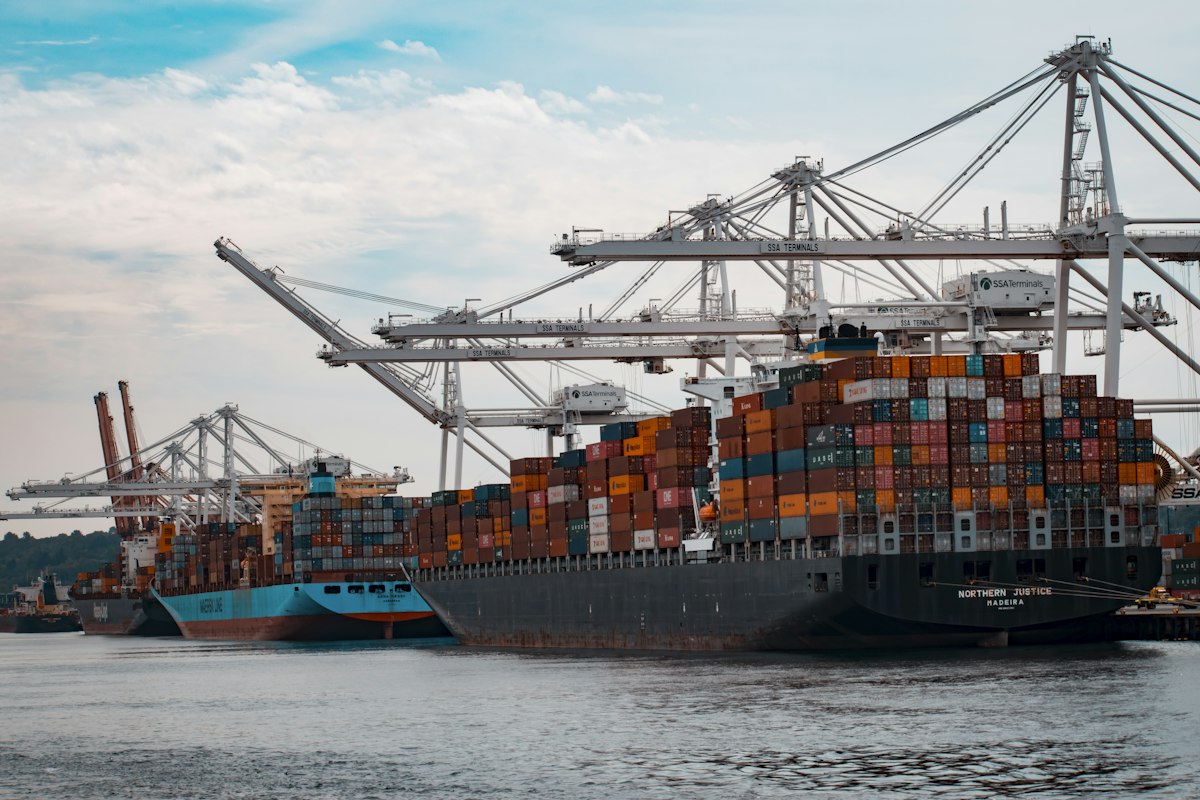
Step-by-Step Landed Cost Calculation: Factory Gate to FBA Warehouse
Landed cost is the total cost of a product delivered to its final destination, encompassing every expense from the factory floor to the warehouse shelf. For Taiwan brands selling through Amazon FBA, the landed cost per unit determines the minimum viable selling price and the maximum achievable margin. Miscalculating landed cost by even 5 to 10 percent can transform a profitable product into a money-losing proposition. The calculation must be thorough, accounting for 8 to 12 distinct cost components depending on the destination market.
The starting point is the EXW (Ex Works) factory gate price, which is the manufacturer's quoted price for the finished product at the factory door. This price typically includes raw materials, labor, factory overhead, and the manufacturer's profit margin. For Taiwan consumer products, EXW prices range from USD 0.50 to USD 15.00 per unit depending on the product category. A bamboo kitchen utensil might have an EXW price of USD 1.20, while a premium electronic accessory might cost USD 8.50. Always negotiate EXW pricing separately from shipping and logistics to maintain cost transparency.
Domestic logistics in Taiwan add USD 0.05 to USD 0.30 per unit for trucking from the factory to the port of departure. This cost depends on the factory's location relative to the port (Keelung for northern Taiwan, Taichung for central, Kaohsiung for southern), the shipment volume, and whether LCL (less than container load) or FCL (full container load) shipping is used. FCL shipments from factory to port cost approximately TWD 3,000 to TWD 8,000 per 20-foot container, which translates to roughly USD 0.03 to USD 0.10 per unit for a container holding 5,000 to 15,000 units.
Ocean freight is typically the largest logistics cost component. FCL rates from Taiwan to US West Coast ports (Los Angeles, Long Beach) range from USD 2,500 to USD 5,000 per 20-foot container as of 2026, depending on season and carrier. For a 20-foot container holding 8,000 consumer product units, ocean freight adds USD 0.31 to USD 0.63 per unit. LCL rates for smaller shipments run approximately USD 50 to USD 80 per cubic meter, which often translates to USD 0.80 to USD 2.00 per unit -- significantly more expensive per unit than FCL. Taiwan to Australia ocean freight costs USD 1,800 to USD 3,500 per 20-foot container, while Taiwan to Japan costs USD 800 to USD 1,500 due to the shorter distance.
Marine cargo insurance adds 0.3 to 0.5 percent of the CIF (Cost, Insurance, Freight) value. For a shipment with a CIF value of USD 30,000, insurance costs USD 90 to USD 150. While technically optional, marine insurance is strongly recommended for all international shipments. The insurance premium is negligible compared to the potential loss from cargo damage, which occurs in approximately 2 to 3 percent of international ocean shipments.
Customs Duties, Taxes, and Last-Mile Delivery Costs by Market
US customs duties are assessed based on the Harmonized Tariff Schedule (HTS) classification of the imported product. Duty rates for Taiwan consumer products entering the US range from 0 percent (many electronics and components) to 25 percent (certain steel and aluminum products, products subject to Section 301 tariffs). Most consumer goods from Taiwan face duty rates of 2 to 8 percent. For example, bamboo kitchenware (HTS 4419) carries a duty rate of 3.2 percent, while ceramic tableware (HTS 6912) is charged 0 to 9 percent depending on the specific item. The duty is calculated on the declared customs value, typically the CIF value.
Australia's import duties for consumer products range from 0 to 10 percent under the standard tariff schedule. Australia and Taiwan do not have a bilateral free trade agreement, so most products are subject to the general tariff rate. However, many consumer goods categories carry a 0 percent duty rate under Australia's unilateral tariff reductions. GST of 10 percent is assessed on the customs value plus duty amount for goods valued above AUD 1,000 imported by businesses. For goods under AUD 1,000 sold through Amazon, the GST is collected by Amazon at the point of sale rather than at the border.
Japan's import duties on consumer products range from 0 to 30 percent, with most manufactured goods falling in the 0 to 5 percent range. Japan applies the WTO Most Favored Nation (MFN) tariff rate to imports from Taiwan. Food products face higher duties: processed foods 5 to 25 percent, tea 17 percent, and certain agricultural products up to 30 percent or more. Japan's consumption tax of 10 percent (8 percent for food and non-alcoholic beverages) is assessed on the CIF value plus duty. The combined duty and consumption tax can add 15 to 35 percent to the landed cost of food products entering Japan.
Last-mile delivery from the port of entry to the Amazon FBA warehouse adds USD 0.15 to USD 0.50 per unit in the US, depending on the distance between the port and the designated FBA fulfillment center. Amazon's partnered carrier program through Seller Central offers discounted last-mile trucking rates, typically 20 to 30 percent below commercial LTL (less than truckload) rates. In Australia, last-mile delivery to FBA Melbourne or Sydney costs approximately AUD 0.20 to AUD 0.60 per unit. In Japan, delivery to FBA centers in the Kanto (Tokyo/Chiba) or Kansai (Osaka) regions costs approximately JPY 30 to JPY 80 per unit.
Currency conversion costs are often overlooked in landed cost calculations but can significantly impact margins. Converting from TWD to USD for component pricing, USD to TWD for profit repatriation, and managing AUD and JPY conversion each incurs costs of 0.3 to 1.5 percent depending on the conversion method used (bank wire, Payoneer, Wise, or Amazon Seller Wallet). For a product with a total landed cost chain of USD 8.00, currency conversion costs add approximately USD 0.05 to USD 0.12 per unit.
Retail Pricing Methodology: Cost-Plus vs Market-Based Approaches
Cost-plus pricing starts with the total landed cost per unit and adds a target profit margin to determine the retail price. This approach ensures minimum profitability but ignores competitive dynamics and customer willingness to pay. The formula is: Retail Price = Total Landed Cost / (1 - Target Margin - Marketplace Fee Rate). For a product with a landed cost of USD 5.00, a target margin of 30 percent, and an Amazon referral fee of 15 percent, the cost-plus retail price is USD 5.00 / (1 - 0.30 - 0.15) = USD 9.09. After rounding to a psychological price point, this becomes USD 9.99.
Market-based pricing starts with the competitive selling price in the marketplace and works backward to determine whether the product can be profitably sold at that price. This approach better reflects customer price sensitivity and competitive positioning. Analyze the top 20 products in your target niche on Amazon, noting their prices, ratings, and estimated monthly sales volumes. The optimal price point for a new entrant is typically 5 to 15 percent below the category average if the product has fewer reviews, or at or slightly above the average if the product offers measurable quality advantages.
The recommended approach for Taiwan brands is to use market-based pricing as the primary method and cost-plus pricing as a validation check. First, determine the competitive market price by analyzing Amazon search results for your target keywords. Second, calculate the achievable margin at that market price by subtracting all costs (landed cost, FBA fees, referral fees, PPC advertising). Third, if the margin exceeds your minimum target (typically 20 to 25 percent for Amazon FBA), proceed with the market price. If the margin falls below the minimum, either reduce costs through supply chain optimization or reconsider the product's viability for that market.
Margin targets vary by sales channel and should reflect the different cost structures and customer acquisition dynamics of each channel. Amazon FBA products should target a net margin of 25 to 35 percent after all marketplace fees and advertising costs. Wholesale/B2B distribution channels require lower margins of 15 to 20 percent because volume is higher and customer acquisition costs are lower. D2C sales through Shopify or a brand website should target 50 to 60 percent gross margin because the seller retains the full retail price and controls the customer relationship, though marketing costs (Facebook/Google ads at 15 to 25 percent of revenue) reduce the effective margin.
Promotional pricing strategy requires pre-planning within the margin structure. Allocate 5 to 10 percent of the retail price for promotional discounts including Amazon coupons, Lightning Deals, and seasonal sales events (Prime Day, Black Friday). A product priced at USD 19.99 with a 30 percent margin has USD 2.00 to USD 4.00 available for promotional discounts before reaching the break-even point. Setting an absolute floor price (the lowest price you will sell at under any circumstances) prevents promotional pricing from eroding profitability. This floor price should be communicated to all team members managing pricing and promotions.
Break-Even Analysis and Scenario Planning for Export Products
Break-even analysis determines the minimum number of units that must be sold to recover the total investment in bringing a product to market. For a new product launch on Amazon, the total investment includes product development costs (mold tooling, certifications, testing), initial inventory purchase, shipping and landed costs, listing creation (photography, copywriting, A+ Content), and launch marketing budget. A typical new product launch on Amazon US requires a total investment of USD 15,000 to USD 50,000 depending on the product category and initial inventory quantity.
The break-even formula is: Break-Even Units = Total Fixed Investment / (Selling Price - Variable Cost Per Unit). Variable costs include COGS (cost of goods sold), FBA fulfillment fee, referral fee, and per-unit advertising cost. For a product selling at USD 24.99 with variable costs of USD 14.50 per unit and a total launch investment of USD 25,000, the break-even point is 2,381 units. At a daily sales rate of 5 units, break-even is reached in approximately 476 days (16 months). At 10 units per day, break-even is reached in 238 days (8 months). This analysis highlights the importance of achieving strong initial sales velocity.
Scenario planning should model three cases: conservative, expected, and optimistic. The conservative scenario assumes daily sales of 3 to 5 units, average PPC ACOS of 35 to 40 percent, and no organic ranking improvements over 6 months. The expected scenario assumes 8 to 12 daily units, ACOS declining from 30 percent to 20 percent over 6 months, and organic sales comprising 50 to 60 percent of total sales by month 6. The optimistic scenario assumes 15 to 25 daily units, ACOS declining to 15 percent, and organic sales reaching 70 to 80 percent of total by month 6. Each scenario should be modeled in a spreadsheet with monthly projections for 12 to 24 months.
Currency fluctuation scenarios should be layered on top of sales scenarios for Taiwan exporters. Model the impact of a 5 percent TWD strengthening (which reduces USD revenue value by 5 percent when converted to TWD), a stable exchange rate, and a 5 percent TWD weakening (which increases TWD revenue value). For a product with a 30 percent margin at current exchange rates, a 5 percent TWD strengthening reduces the effective margin to approximately 26.5 percent. If this revised margin is still above the minimum acceptable threshold, the product can withstand moderate currency volatility.
The ultimate output of break-even and scenario analysis is a go/no-go decision matrix for each product-market combination. The matrix should specify the minimum conditions under which the product should be launched (e.g., "launch if expected scenario shows positive cumulative cash flow within 12 months and conservative scenario shows break-even within 18 months") and the conditions under which the product should be discontinued (e.g., "discontinue if actual daily sales fall below conservative scenario for 3 consecutive months"). This disciplined approach prevents emotional attachment to underperforming products and focuses resources on the highest-return opportunities.
Frequently Asked Questions
What is the typical landed cost as a percentage of retail price for Amazon FBA products?
The total landed cost (factory price plus all logistics, duties, and fees to reach FBA) typically represents 30 to 50 percent of the retail selling price for products achieving a 25 to 35 percent net margin on Amazon. For a product selling at USD 24.99, the landed cost should be USD 7.50 to USD 12.50. If your landed cost exceeds 50 percent of the target retail price, the product will likely be unprofitable after accounting for Amazon fees and advertising costs.
How do I find the correct HTS code and duty rate for my product?
Use the US International Trade Commission's Harmonized Tariff Schedule search tool at hts.usitc.gov to look up your product's classification and duty rate. Enter a description of your product and browse the matching tariff headings. For complex products that could fall under multiple classifications, consult a licensed customs broker who can issue a binding ruling request to US Customs (CBP) for definitive classification. Incorrect classification can result in duty underpayment penalties of 2 to 4 times the underpaid amount.
Should I use FCL or LCL shipping from Taiwan?
Use FCL (full container load) when your shipment volume exceeds 10 to 12 cubic meters or 4,000 to 6,000 units of typical consumer products. FCL costs USD 0.30 to USD 0.65 per unit versus LCL at USD 0.80 to USD 2.00 per unit, a savings of 50 to 70 percent. For new product launches with smaller initial orders, LCL is acceptable despite the higher per-unit cost. Transition to FCL once monthly order volumes justify a full container every 4 to 6 weeks.
What net margin should I target for Amazon FBA products?
Target a net margin of 25 to 35 percent after all costs including COGS, FBA fees, referral fees, and PPC advertising. Products with margins below 20 percent are at high risk of becoming unprofitable due to fee increases, competition-driven price pressure, or currency fluctuations. Products with margins above 35 percent are well-positioned to invest in growth through advertising and promotions while maintaining healthy profitability.
How do I account for Amazon advertising costs in my pricing?
Budget 10 to 20 percent of retail price for Amazon PPC advertising in the first 6 months of a product launch, declining to 5 to 10 percent for established products with strong organic ranking. For a product priced at USD 24.99, this means USD 2.50 to USD 5.00 per unit in advertising costs. Include this in your variable cost calculation before determining net margin. The advertising cost per unit decreases as organic sales increase and ACOS improves over time.
Sources & References
- —United States International Trade Commission, Harmonized Tariff Schedule of the United States, USITC, 2025
- —Australian Border Force, Working Tariff, Australian Government Department of Home Affairs, 2025
- —Japan Customs, Japan's Tariff Schedule, Ministry of Finance, 2025
- —Freightos, International Freight Rate Index and Ocean Shipping Cost Benchmarks, 2025
Ready to Enter the US Market?
We turn great products into global sales. Contact us today.
Start a partnershipMore Articles
View All →