
LNH31.
Cross-border trade · B2B · Amazon
Operations10·
Seasonal Inventory Demand Planning for Cross-Border Ecommerce Sellers
Practical seasonal inventory planning guide for cross-border ecommerce sellers covering Q4 holiday and Prime Day preparation timelines, lead time buffer calculations, safety stock formulas, seasonal demand multipliers by category, and clearance strategies using tools like Forecastly and SoStocked.
seasonal inventory planningecommerce demand forecastingfba seasonal stock strategy
The Cross-Border Timeline Problem: Why You Must Plan 6 Months Ahead
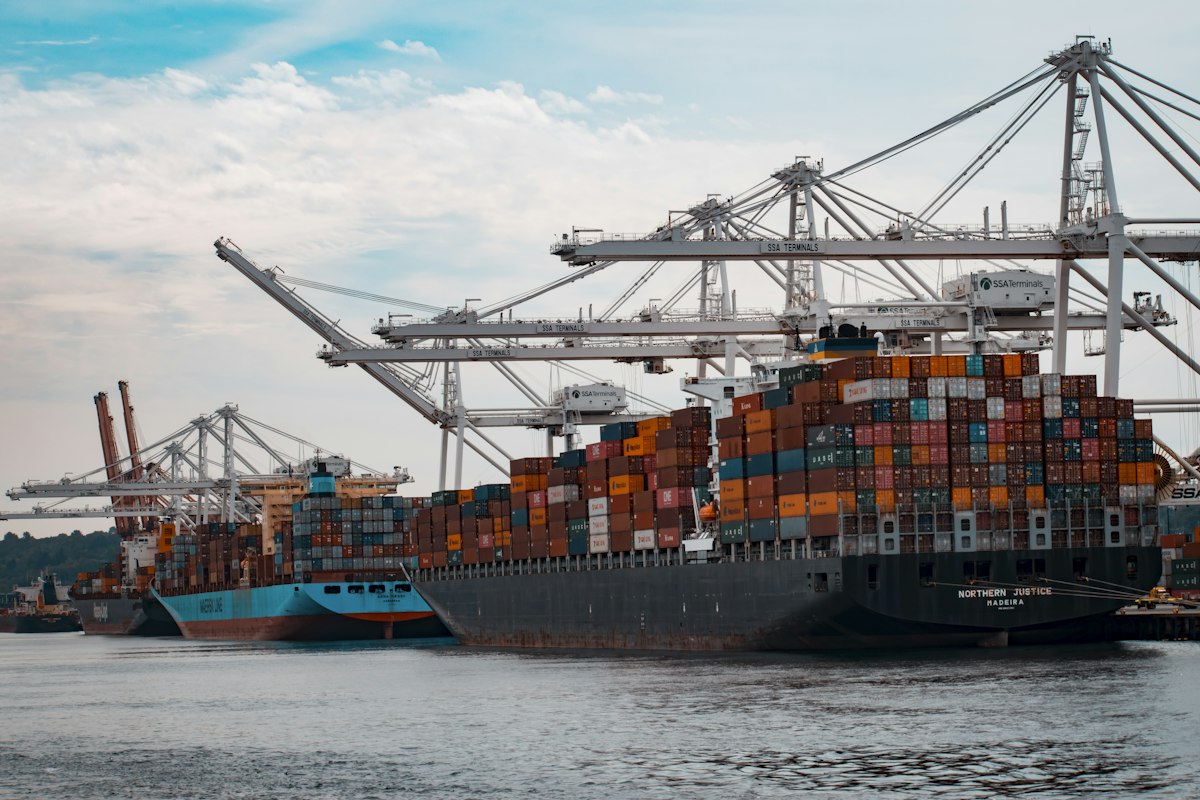
Cross-border ecommerce sellers face a fundamentally different inventory planning challenge than domestic sellers: the total replenishment lead time from purchase order to available-for-sale on Amazon is 55 to 85 days, compared to 10 to 20 days for US domestic brands. This lead time breaks down as: production in Taiwan (15 to 25 days for health supplements, 20 to 35 days for consumer goods), quality control and export documentation (3 to 5 days), ocean freight from Taiwan to the US West Coast (14 to 18 days) or East Coast (25 to 30 days), US customs clearance (3 to 7 days), drayage from port to FBA warehouse (2 to 5 days), and FBA receiving and stow (5 to 14 days, extending to 21+ days during peak season from September through December).
This 55 to 85 day pipeline means that Q4 holiday inventory (needed on Amazon shelves by October 1 for Black Friday and Cyber Monday) must be ordered from your Taiwan manufacturer by July 1 at the latest. Prime Day inventory (typically mid-July) must be ordered by March 1. Amazon's FBA receiving capacity becomes increasingly constrained from September onwards, with receiving times extending from the standard 5 to 7 days to 14 to 21 days during peak season. In 2024, some sellers reported FBA receiving times of 28 days in November, effectively making inventory ordered after August 15 too late for the holiday selling season.
The financial consequences of poor seasonal planning are severe and asymmetric. Under-ordering for Q4 results in stockouts that cost the average FBA seller USD 500 to USD 2,000 per day in lost revenue per ASIN, plus a 20 to 40 percent organic ranking drop that takes 2 to 4 weeks to recover after restocking. Over-ordering results in long-term storage fees (USD 6.90 per cubic foot for inventory stored over 365 days), aged inventory surcharges, and potential disposal costs. The optimal error is to slightly over-order by 10 to 15 percent rather than under-order, as the cost of excess inventory (storage fees) is far lower than the cost of stockouts (lost sales plus ranking damage).
Build your annual inventory calendar during the first week of January. Mark the order deadlines for each seasonal peak, working backwards from the required on-shelf date by your total lead time plus a 14-day buffer. The key dates for a Taiwan-to-US FBA seller are: January 15 (order for Prime Day inventory), March 15 (order for back-to-school), June 1 (order for Q4 holiday ramp), July 15 (absolute last order for Q4 holiday, air freight contingency only), and October 1 (order for Q1 Chinese New Year and Valentine's Day). Print this calendar and share it with your manufacturer, freight forwarder, and entire operations team.
Safety Stock Calculation and Demand Multipliers by Category
The safety stock formula for cross-border FBA sellers accounts for both demand variability and supply lead time variability. The practical formula is: Safety Stock = Average Daily Sales multiplied by Total Lead Time Days multiplied by a Safety Factor of 1.5. For a product selling 10 units per day with a 70-day lead time, safety stock equals 10 multiplied by 70 multiplied by 1.5, equaling 1,050 units. This means you should have 1,050 units of safety stock in addition to your expected sales inventory for the replenishment period. The 1.5 multiplier accounts for a 50 percent buffer against demand spikes and shipping delays, which is appropriate for most cross-border sellers with reliable supply chains.
Seasonal demand multipliers vary significantly by product category and should be applied to your baseline daily sales when calculating seasonal inventory needs. Health and wellness supplements: Q4 multiplier 1.3x (New Year resolution buyers), Q1 multiplier 1.5x (January-February peak), Prime Day multiplier 1.2x. Beauty and personal care: Q4 multiplier 2.0x (gifting), Valentine's Day multiplier 1.4x, Mother's Day multiplier 1.6x. Fitness equipment and accessories: Q1 multiplier 2.2x (resolution buyers), Q4 multiplier 1.5x (gifting). Food and beverage: Q4 multiplier 1.8x (holiday entertaining), Prime Day multiplier 1.3x. These multipliers are derived from SPINS and Amazon category sales data aggregated across 500+ sellers.
Reorder point calculation determines when to trigger a new purchase order. Reorder Point = (Average Daily Sales multiplied by Lead Time Days) plus Safety Stock. Using the earlier example: Reorder Point equals (10 multiplied by 70) plus 1,050, equaling 1,750 units. When your FBA available inventory drops to 1,750 units, place your next order. Monitor your inventory levels daily using Amazon's Inventory Dashboard or third-party tools (SoStocked at USD 49/month, Forecastly at USD 59/month, or RestockPro at USD 79/month), which automate these calculations and send reorder alerts based on your customized parameters.
Adjust your demand forecasting model monthly using Amazon's Business Reports data. Pull the "Detail Page Sales and Traffic" report for the trailing 90 days and calculate your actual average daily units ordered (not page views or sessions, which are leading indicators but not reliable for inventory planning). Compare your actual sales velocity to your forecast and adjust future orders accordingly. A product trending 20 percent above forecast needs an immediate reorder adjustment, not a wait-and-see approach. The single biggest mistake cross-border sellers make is relying on quarterly reviews instead of monthly adjustments, leading to 2 to 3 month response lags that cause either stockouts or overstock by the time corrections take effect.
Q4 Holiday and Prime Day Preparation Playbooks
Q4 Holiday Playbook (June through December): By June 1, finalize your Q4 product lineup and place purchase orders for all Q4 inventory with your Taiwan manufacturer. Target production completion by July 15 for ocean freight shipping by July 25 at the latest. Use Flexport or Freightos to book ocean freight 4 to 6 weeks in advance, as Q3 shipping rates from Asia to the US increase 15 to 30 percent due to peak season surcharges and space becomes scarce. By September 1, your Q4 inventory should be received and stowed in FBA warehouses. Create your Amazon advertising campaigns and coupon offers in September, scheduling them to activate on November 1 for the holiday shopping ramp.
If you miss the June 1 order deadline, air freight is your contingency at significantly higher cost. Air freight from Taiwan to the US costs approximately USD 4.50 to USD 7.00 per kilogram (compared to USD 0.15 to USD 0.25 per kilogram for ocean freight), with transit times of 3 to 5 days. For a 1,000-unit order of health supplements weighing 500 grams each, air freight costs approximately USD 2,250 to USD 3,500 versus USD 75 to USD 125 for ocean freight. Use air freight selectively for your top 3 to 5 best-selling SKUs that have the highest margin and fastest sell-through rates, and accept stockouts on lower-performing SKUs rather than air-freighting your entire catalog.
Prime Day Playbook (January through July): Amazon typically announces Prime Day dates in late May or early June, but the event consistently falls in mid-July. Place Prime Day inventory orders by January 15 (6 months before the event) for ocean freight, or by April 1 for air freight contingency. Increase your order quantity by 20 to 30 percent above normal monthly run rate to cover the Prime Day sales spike plus post-Prime Day momentum (sales typically remain elevated for 2 to 3 weeks after the event). Submit your Prime Day deal applications by the Amazon deadline (usually late April or early May), choosing between Lightning Deals (USD 300 fee, 4 to 12 hour duration, 15 percent minimum discount) and Best Deals (no fee, 7-day duration, 20 percent minimum discount).
Post-seasonal demand planning is equally important. After Q4, health supplement sales typically drop 30 to 40 percent in February through March before stabilizing. If you over-ordered for Q4, do not panic-discount immediately. Instead, reduce your Amazon PPC spend by 20 to 30 percent in January to lower your total variable cost, and gradually draw down excess inventory over 60 to 90 days. If you have more than 6 months of inventory on hand after Q4, create removal orders for the oldest stock (USD 0.97 per unit for removal to an address, or USD 0.24 per unit for disposal) and liquidate through Amazon's FBA Liquidation program (recovering approximately 5 to 10 percent of the selling price) rather than paying long-term storage fees of USD 6.90 per cubic foot per month.
Tools and Clearance Strategies for Excess Inventory
SoStocked (soStocked.com, USD 49 to USD 199 per month depending on SKU count) is purpose-built for Amazon FBA inventory planning. The platform pulls your Amazon sales data automatically, calculates reorder points based on customizable lead times (you can set different lead times for ocean versus air freight), applies seasonal demand adjustments using either historical data or manual multipliers, and sends email and dashboard alerts when inventory levels hit reorder thresholds. SoStocked's "Excess Inventory" view identifies products with more than 90 days of estimated inventory on hand, helping you proactively plan clearance before long-term storage fees kick in. Setup takes approximately 2 hours to connect your Amazon account and configure lead times.
Forecastly (forecastly.com, USD 59 to USD 149 per month) focuses specifically on demand forecasting accuracy, using machine learning algorithms trained on 500 million+ Amazon transactions to predict future sales velocity. Forecastly is particularly effective at predicting seasonal demand patterns because its models incorporate category-level seasonality curves, not just your individual product history. The platform also simulates different order quantity scenarios, showing the projected stockout probability and excess inventory risk for each option. For Taiwan brands with limited US sales history (under 12 months), Forecastly's category-level forecasting compensates for the lack of year-over-year comparison data.
RestockPro (restockpro.com, USD 79 to USD 299 per month) combines inventory planning with shipment workflow management. Beyond forecasting, RestockPro generates FBA shipment plans, calculates optimal case pack quantities to minimize FBA inbound fees, and tracks inventory in transit from your Taiwan manufacturer through to FBA stow. The "Supplier Management" module lets you set up your Taiwan manufacturers with lead times, minimum order quantities, and production schedules, then automatically generates purchase orders when reorder points are triggered. This end-to-end workflow reduces the manual coordination that causes most inventory planning failures.
When excess inventory accumulates despite your best planning, execute a staged clearance strategy. Stage 1 (30 to 60 days excess): increase Amazon PPC spend by 15 to 20 percent to accelerate sell-through without discounting. Stage 2 (60 to 90 days excess): create Amazon coupons offering 10 to 15 percent off (coupon cost USD 0.60 per redemption) and enroll in Amazon Outlet Deals. Stage 3 (90 to 180 days excess): list the products on secondary marketplaces (eBay, Walmart.com) at 20 to 30 percent below Amazon price, and explore B2B liquidation through platforms like Bulq.com or Direct Liquidation (recovering 20 to 40 percent of retail value). Stage 4 (180+ days excess): use Amazon's FBA Liquidation program (5 to 10 percent recovery) or create removal orders to your US 3PL for donation to charitable organizations (tax deduction at fair market value under IRS Section 170).
Frequently Asked Questions
When should I order Q4 holiday inventory from my Taiwan manufacturer?
Place your Q4 purchase order by June 1 for ocean freight delivery. This allows 15 to 25 days for production, 14 to 18 days for ocean transit to the US West Coast, 3 to 7 days for customs, and 5 to 14 days for FBA receiving, with inventory on Amazon shelves by September 1 to September 15. If you miss the June 1 deadline, air freight your top SKUs by August 15 at 20 to 30 times the shipping cost, and accept stockouts on lower-margin products.
How do I calculate safety stock for cross-border FBA selling?
Use this formula: Safety Stock = Average Daily Sales x Total Lead Time Days x 1.5. For example, if you sell 15 units per day and your total lead time is 70 days, your safety stock is 15 x 70 x 1.5 = 1,575 units. The 1.5 multiplier provides a 50 percent buffer against demand spikes and shipping delays. Increase the multiplier to 2.0 for peak seasons (Q4, Prime Day) and reduce to 1.2 for slow seasons (February-March).
What is the best inventory planning tool for Amazon FBA sellers?
SoStocked (USD 49/month) is the best value for sellers with fewer than 50 SKUs. Forecastly (USD 59/month) provides the most accurate demand forecasting for sellers with limited sales history, as its machine learning models use category-level data. RestockPro (USD 79/month) is best for sellers who need end-to-end workflow management from purchase order through FBA shipment creation. Start with a free trial of each and compare the reorder recommendations against your actual sales data.
Sources & References
- —Amazon Seller Central -- FBA Inventory Storage Limits and Restock Recommendations Documentation 2025
- —Gartner -- Demand Planning Technology for Small and Mid-Market Ecommerce Survey 2025
- —SPINS -- US Natural Product Seasonal Sales Patterns and Category Multiplier Report 2025
Ready to Enter the US Market?
We turn great products into global sales. Contact us today.
Start a partnershipMore Articles
View All →

Cross-Border Trade
How Trade Shows Generate Export Leads: A Practical Guide for Taiwan Brands
8 min read