
LNH31.
Cross-border trade · B2B · Amazon
Operations10 min read·
Cross-Border Ecommerce Warehouse Strategy: Bonded Zone vs Direct Ship Models
Compare bonded warehouse, FBA direct ship, and 3PL hybrid models for Taiwan brands selling across US, Australia, and Japan ecommerce marketplaces.
cross-border ecommerce warehouse strategybonded warehouse ecommercefba direct ship vs 3pl hybrid
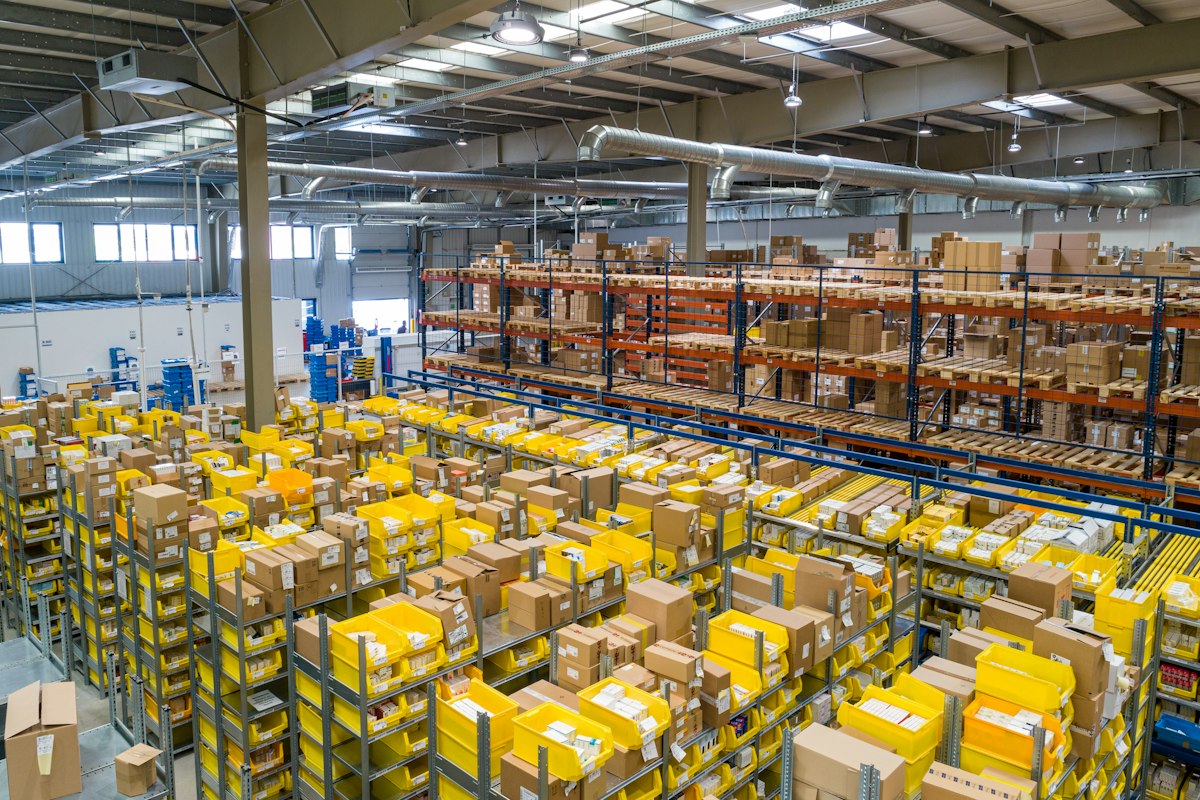
Three Warehouse Models for Cross-Border Ecommerce
Taiwan brands selling across multiple international ecommerce marketplaces face a fundamental strategic decision: where to store inventory and how to fulfill orders. The three primary warehouse models are bonded zone warehousing (storing inventory in a foreign trade zone near the destination market for duty deferral and rapid deployment), FBA direct ship (shipping inventory directly from Taiwan to Amazon's fulfillment centers), and 3PL hybrid (using a third-party logistics provider in the destination market as a central distribution hub serving multiple channels). Each model has distinct cost structures, operational complexities, and strategic advantages.
Bonded zone warehousing involves storing inventory in a designated foreign trade zone (FTZ in the US, bonded warehouse in Australia, or hozei soko in Japan) where imported goods can be stored, manipulated, and re-exported without paying import duties until the goods enter the domestic commerce of the host country. The key advantage is cash flow: you defer customs duties until goods are actually sold and shipped to customers, rather than paying duties on your entire inventory shipment at the time of import. For a Taiwan brand with USD 200,000 of inventory at 5 percent average duty rate, bonded zone storage defers USD 10,000 in duty payments until the inventory sells, improving working capital by that amount.
FBA direct ship is the simplest model: you ship inventory from Taiwan directly to Amazon's designated fulfillment centers. Amazon handles all storage, picking, packing, and shipping. The advantage is zero third-party warehouse costs and immediate access to Prime eligibility. The disadvantage is that inventory is locked in Amazon's system and cannot be used to fulfill orders from other channels (your own website, Walmart, Rakuten, or retail partners) without paying Amazon's Multi-Channel Fulfillment (MCF) fees, which are 50 to 100 percent higher than standard FBA fulfillment fees. For brands selling only on Amazon, FBA direct ship is optimal. For brands with multi-channel ambitions, it creates inventory fragmentation.
The 3PL hybrid model uses an independent third-party logistics provider in the destination market as a central inventory hub. You ship bulk inventory from Taiwan to the 3PL warehouse, and the 3PL distributes inventory to Amazon FBA (via merchant-fulfilled replenishment), your direct-to-consumer website orders (via carrier integration), wholesale customers (via palletized shipment), and other marketplaces. This model maximizes inventory flexibility but adds a layer of cost (3PL storage and handling fees) and operational complexity (inventory management across multiple sales channels). The 3PL hybrid becomes cost-effective when your non-Amazon sales channels represent more than 30 percent of total revenue.
Cost Comparison: Bonded Zone, FBA, and 3PL for a Typical Taiwan Brand
Consider a Taiwan health supplement brand shipping 5,000 units per month across the US, Australia, and Japan. Under the FBA direct ship model, the brand ships three separate shipments to each market's FBA warehouses, paying import duties on the full inventory value at each border. Assuming an average product value of USD 15 per unit and average duty rate of 4 percent across markets, the brand pays USD 3,000 in duties per month (5,000 units x USD 15 x 4%). FBA storage fees add approximately USD 0.87 per cubic foot per month (US standard size, off-peak). Total monthly FBA-specific costs for storage and fulfillment across three markets range from USD 12,000 to USD 18,000 depending on product dimensions and sales velocity.
Under the bonded zone model in the US, the brand ships a quarterly bulk shipment to a Foreign Trade Zone near a major port (Long Beach, Newark, or Savannah). Duties are deferred until goods leave the FTZ for domestic delivery, which means only goods that actually sell incur duties. If sell-through rate is 85 percent within the quarter, the brand pays duties on 85 percent of inventory rather than 100 percent, saving USD 450 per quarter in duty payments on the unsold 15 percent. FTZ storage costs range from USD 3 to USD 8 per pallet per month, and FTZ operator handling fees add USD 0.30 to USD 0.80 per unit for receiving, storage, and outbound preparation. Total monthly bonded zone costs are approximately USD 4,000 to USD 7,000.
The 3PL hybrid model in the US using a mid-sized 3PL (receiving, storage, pick-and-pack, and shipping) costs approximately USD 25 to USD 35 per pallet per month for storage, USD 2.50 to USD 4.00 per order for pick-and-pack, and USD 0.30 to USD 0.50 per unit for receiving and put-away. For 5,000 units per month with an average of 1,000 orders, the total 3PL cost is approximately USD 4,500 to USD 7,000 per month. However, the 3PL can fulfill orders across all channels (Amazon via Seller Fulfilled Prime or FBA replenishment, direct website, Walmart, and wholesale), eliminating the need for separate inventory pools and reducing total inventory requirements by 15 to 25 percent through consolidation.
The breakeven point between FBA direct ship and 3PL hybrid typically occurs when non-Amazon channels represent 25 to 35 percent of total units shipped. Below that threshold, the operational simplicity of FBA direct ship outweighs the inventory consolidation benefits of 3PL hybrid. Above that threshold, the cost savings from consolidated inventory and lower per-unit fulfillment costs for non-Amazon orders make 3PL hybrid more economical. Taiwan brands entering a new market should start with FBA direct ship for the first 6 to 12 months, then transition to 3PL hybrid once they establish additional sales channels and have sufficient demand data to optimize inventory levels.
Operational Considerations: Lead Times, Compliance, and Scalability
Lead time management differs significantly across the three models. FBA direct ship from Taiwan to US FBA warehouses takes 30 to 45 days (ocean freight) or 10 to 15 days (air freight), plus 5 to 14 days for FBA receiving and check-in. During peak seasons (Q4 in the US, Golden Week in Japan), FBA receiving delays can extend to 21 to 30 days, meaning your total lead time from Taiwan to available-for-sale can reach 75 days by ocean. Bonded zone and 3PL models reduce replenishment lead time within the destination market to 3 to 7 days because inventory is already in-country, but require a longer lead time for the initial bulk shipment from Taiwan.
Customs compliance requirements vary by warehouse model. FBA direct ship requires you to complete import customs clearance for each shipment before Amazon will accept it, which means engaging a customs broker in each market. Bonded zone storage shifts some compliance complexity to the FTZ operator, who manages the entry and exit documentation, but you still need a customs broker for final entry when goods leave the FTZ. 3PL warehouses do not provide customs services, so you need a customs broker relationship regardless. For all three models, the Importer of Record (IOR) must be a legal entity registered in the destination country, which Taiwan brands typically address through their US LLC, Australian subsidiary, or Japanese KK.
Scalability characteristics favor the 3PL hybrid model for brands expecting rapid growth. FBA direct ship scales easily for Amazon-only sales but creates inventory allocation headaches when adding new channels. Bonded zone storage is excellent for duty optimization but FTZ operators often have limited value-added services (labeling, kitting, bundling). 3PL providers can scale from hundreds to tens of thousands of orders per month, offer value-added services including Japanese labeling, Australian TGA-compliant relabeling, and US-market packaging conversion, and integrate with multiple marketplace and ecommerce platforms through API connections.
Risk mitigation is another consideration. FBA direct ship concentrates risk: if Amazon suspends your seller account or experiences a fulfillment center issue, 100 percent of your inventory is inaccessible. The 2024 incident where an Amazon warehouse fire in Ontario, California destroyed inventory for hundreds of sellers illustrates this concentration risk. Bonded zone and 3PL models distribute risk by keeping inventory under your control (or your 3PL's control) with the ability to redirect shipments to alternative channels if any single marketplace experiences disruption. For Taiwan brands with USD 100,000 or more in US inventory, diversifying storage beyond FBA alone is a prudent risk management strategy.
Market-Specific Warehouse Recommendations for Taiwan Brands
For the US market, start with FBA direct ship and add a 3PL hub once monthly sales exceed 2,000 units. Recommended 3PL partners in the US for Taiwan brands include ShipBob (technology-first, good for DTC integration), Deliverr (now part of Shopify Fulfillment Network, integrates with Walmart and Amazon), and Ruby Has (strong in health and beauty categories with FDA-compliant storage). Position your 3PL in a central US location (Texas, Ohio, or Pennsylvania) for coast-to-coast shipping in 2 to 3 business days. Budget USD 5,000 to USD 8,000 for 3PL onboarding and integration setup.
For the Australian market, use FBA direct ship to Amazon Australia if Amazon is your only channel. However, because Amazon Australia represents only approximately 5 to 7 percent of Australian ecommerce (compared to 40 percent in the US), most Taiwan brands targeting Australia will also sell through Chemist Warehouse, Priceline, Woolworths, and independent health food retailers. In this multi-channel scenario, partner with an Australian 3PL such as Fulfilio, eStore Logistics, or IFS Global Logistics, with warehousing in Melbourne (near the API distribution center for Priceline and Chemist Warehouse distribution). Australian 3PL costs run AUD 3.50 to AUD 6.00 per order for pick-and-pack and AUD 15 to AUD 30 per pallet per month for storage.
For the Japanese market, FBA Japan is the strongest single-channel option because Amazon Japan has approximately 25 percent ecommerce market share. If you also sell on Rakuten, Yahoo Shopping, or through Japanese distributors, use a Japanese 3PL with experience handling imported health products. Recommended Japanese 3PL providers include Openlogi (technology-forward, API integration with Rakuten and Yahoo Shopping), eLogit (specializes in health and beauty products with temperature-controlled storage), and SBS Ricoh Logistics (large scale, cold chain capable). Japanese 3PL costs are higher than US or Australian equivalents: JPY 400 to JPY 600 per order for pick-and-pack and JPY 6,000 to JPY 10,000 per pallet per month for storage.
The optimal long-term strategy for Taiwan brands selling across all three markets is a hub-and-spoke model with a central inventory planning function in Taiwan coordinating with local 3PL or FBA operations in each market. Use your Taiwan operations team to manage production scheduling, purchase orders, and ocean freight consolidation, then distribute bulk shipments to each market's local warehouse partner. This model keeps decision-making close to the supply source while leveraging local fulfillment expertise in each market. Invest in an inventory management system (such as Cin7, Ordoro, or Linnworks) that provides multi-warehouse, multi-marketplace visibility from a single dashboard, budgeting USD 200 to USD 800 per month for the software platform.
Frequently Asked Questions
When should a Taiwan brand switch from FBA direct ship to a 3PL hybrid model?
Switch when non-Amazon sales channels represent more than 25 to 35 percent of your total unit volume. At that threshold, the inventory consolidation savings and multi-channel fulfillment efficiency of a 3PL hub outweigh the simplicity advantages of FBA-only fulfillment. Most brands reach this point 12 to 18 months after initial market entry.
How much do foreign trade zone bonded warehouses save on customs duties?
Savings depend on your sell-through rate and inventory holding period. A brand with 85 percent sell-through within a quarter saves duties on the unsold 15 percent. For a brand with USD 200,000 in inventory at 5 percent duty rate, this defers USD 1,500 per quarter. The cash flow benefit is more significant than the absolute duty savings.
Can I use one 3PL to fulfill orders across US, Australia, and Japan?
No. Due to customs regulations, each market requires a locally based warehouse and fulfillment operation. Some global 3PL networks like DHL eCommerce or Nippon Express operate in all three markets, but inventory, fulfillment, and billing are managed separately per country. You will have three separate 3PL relationships to manage.
Sources & References
- —US Customs and Border Protection -- Foreign Trade Zone Manual 2024
- —Department of Agriculture, Fisheries and Forestry -- Licensed Customs Warehouse Guidelines
- —Japan Customs -- Bonded Warehouse (Hozei Soko) Regulations 2025
- —Amazon Seller Central -- Multi-Channel Fulfillment Fee Schedule 2025
Ready to Enter the US Market?
We turn great products into global sales. Contact us today.
Start a partnershipMore Articles
View All →

Cross-Border Trade
How Trade Shows Generate Export Leads: A Practical Guide for Taiwan Brands
8 min read