LNH31.
Cross-border trade · B2B · Amazon
US Market11·
How to Become a BJ's Wholesale Club Supplier: Onboarding Guide for Taiwan Brands
Step-by-step supplier onboarding guide for Taiwan brands seeking to sell through BJ's Wholesale Club's 244 locations, covering the RangeMe application process, EDI requirements, product liability insurance, club channel pack sizes, margin expectations, and competitive comparison with Costco and Sam's Club.
bjs wholesale supplier applicationbjs club vendor onboardingwholesale club supplier guide
BJ's Wholesale Club Market Position and Opportunity
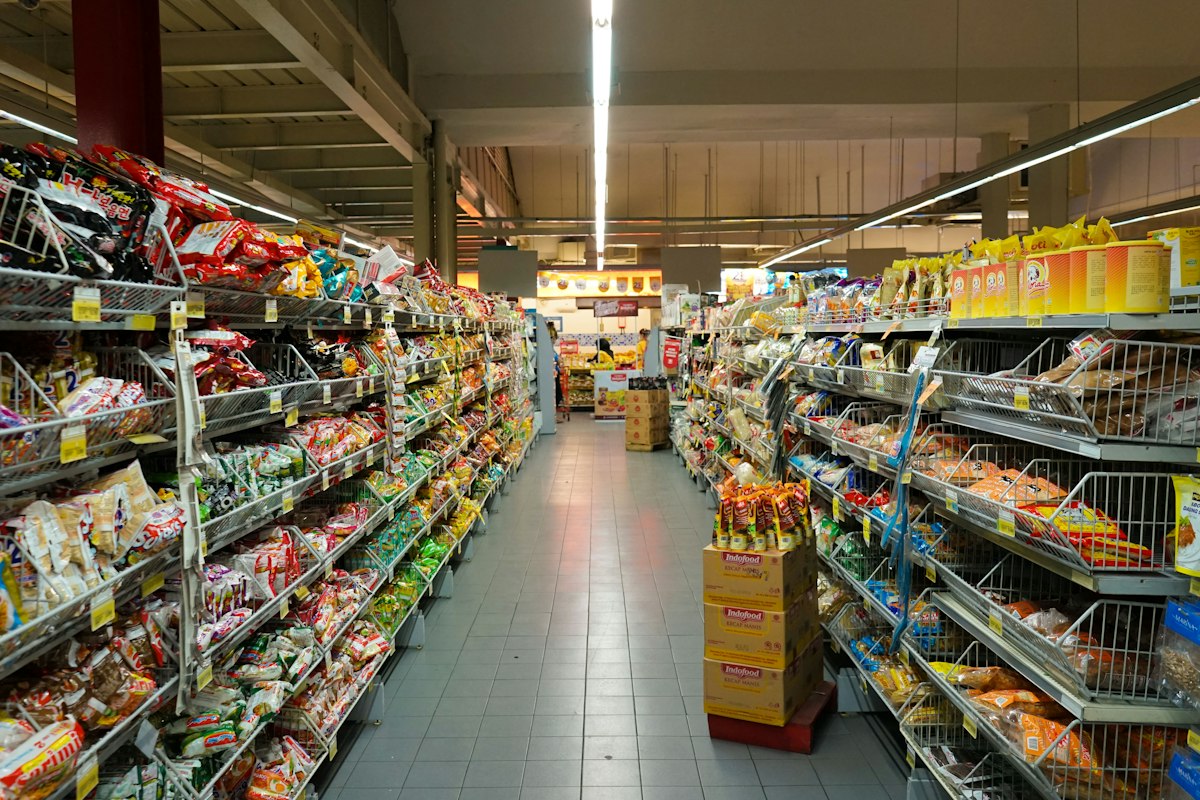
BJ's Wholesale Club operates 244 warehouse clubs across 20 states concentrated on the US East Coast, generating approximately $20 billion in annual revenue with 7.5 million members. While smaller than Costco (591 US locations, $242 billion revenue) and Sam's Club (600 locations, $86 billion revenue), BJ's offers distinct advantages for Taiwan brands entering the warehouse club channel. BJ's accepts manufacturer coupons (Costco and Sam's Club do not), carries more SKUs per category (averaging 7,500 SKUs versus Costco's 3,800), and has a lower barrier to entry for new suppliers due to its smaller buyer team and more accessible procurement process.
BJ's member demographics skew toward middle-income families ($75,000-125,000 household income) in the Northeast and Mid-Atlantic regions. The average BJ's member spends $3,200 annually, visiting 24 times per year. Key product categories where Taiwan brands have the strongest opportunity include consumer electronics and accessories (15% of non-food revenue), home goods and small appliances (12%), health and beauty (8%), and seasonal products (10%). BJ's actively seeks international brands that offer quality products at 20-40% below traditional retail pricing, making Taiwan's manufacturing cost advantage a significant competitive asset.
The club channel buying model differs fundamentally from traditional retail. Products are sold in bulk multi-packs or larger sizes, displayed on pallets in the warehouse, and priced to deliver obvious value compared to grocery and drugstore channels. A product retailing at $8 per unit in a supermarket would be offered at BJ's as a 3-pack for $18, representing a 25% per-unit savings for the consumer. Taiwan brands must design club-specific packaging from the outset, as repackaging standard retail products for club format adds $0.50-1.50 per unit in labor and materials costs.
BJ's is publicly traded (NYSE: BJ) and has experienced strong growth with same-club sales increasing 3.2% in fiscal 2025. The company opened 12 new clubs in 2025 and plans 10-12 new locations annually through 2028, expanding westward into Ohio, Indiana, and Tennessee. This expansion creates incremental shelf space opportunities for new suppliers. BJ's private label brand "Wellsley Farms" (food) and "Berkley Jensen" (non-food) represent 25% of sales, so branded product suppliers must demonstrate clear differentiation from these in-house offerings to secure shelf space.
Supplier Application and Buyer Engagement Process
BJ's uses RangeMe (rangeme.com) as its primary supplier discovery platform. Create a RangeMe Premium account ($399/year for basic, $1,199/year for Premium) and build a complete brand profile including company overview, product catalog with high-resolution images, pricing, certifications, and distribution capabilities. BJ's buyers actively search RangeMe for new products, with the highest engagement in January-March (spring reset planning) and June-August (holiday season planning). Taiwan brands should tag products with relevant category keywords and highlight "direct from manufacturer" pricing to attract buyer attention.
Direct buyer outreach is also possible through BJ's vendor relations department. Email the category-specific buyer using the format firstname.lastname@bjs.com (identify buyers through LinkedIn, industry conferences, or RangeMe connections). Your initial outreach email should be concise (under 200 words): introduce your brand in one sentence, highlight 2-3 products with club channel pricing, reference comparable products currently on BJ's shelves, and request a 30-minute buyer meeting. Follow up exactly once after 7 business days if no response. BJ's buyers typically respond to 15-20% of cold outreach emails from qualified suppliers.
The buyer meeting is your critical opportunity to secure a trial order. Prepare a sell sheet for each product showing: product name and image, club-specific pack configuration, suggested retail price with member savings percentage, wholesale cost to BJ's, competitive product comparison (what it replaces or complements on shelf), expected sell-through velocity, and marketing support commitment. BJ's buyers evaluate four criteria: price value proposition (must show 20-40% savings versus traditional retail), product quality (samples are tested internally), supply chain reliability (consistent 95%+ fill rates), and category fit (does it expand or improve the current assortment?).
Trial orders at BJ's typically start with 50-100 clubs for a 12-16 week test period. Initial order quantities range from 5,000-20,000 units depending on the product category and club count. Successful trial metrics include sell-through rate above 70% during the test period, gross margin meeting or exceeding category targets (8-15%), customer feedback with less than 2% return rate, and on-time delivery at 95%+ during the test. Meeting these benchmarks leads to chainwide authorization across all 244 clubs, with annual volume potential of 50,000-500,000 units depending on the category.
EDI Requirements and Operational Compliance
BJ's requires all suppliers to transact via Electronic Data Interchange (EDI) for purchase orders, invoices, advance ship notices, and payment remittance. BJ's uses the ANSI X12 standard with specific transaction sets: 850 (Purchase Order), 855 (Purchase Order Acknowledgment), 810 (Invoice), 856 (Advance Ship Notice/ASN), and 820 (Payment Remittance). For Taiwan brands without existing EDI infrastructure, the fastest path to compliance is through a Value Added Network (VAN) provider such as SPS Commerce ($500-2,000/month, most popular with BJ's suppliers), TrueCommerce ($400-1,500/month), or Cleo ($800-2,500/month).
SPS Commerce is BJ's preferred EDI partner, offering pre-built connections and BJ's-specific mapping templates. The SPS Commerce Fulfillment module handles order-to-cash automation for $500-1,000 monthly for suppliers processing 100-500 orders per month. Setup and testing require 4-6 weeks, including EDI mapping configuration, test document exchange with BJ's, and production certification. Taiwan brands should designate an operations team member to complete SPS Commerce training (free online modules, 8-10 hours) and serve as the EDI point of contact. Common EDI errors that trigger chargebacks include missing or incorrect ASN data (penalty: $250 per shipment), late ASN submission (penalty: $200 per shipment), and PO acknowledgment delays beyond 24 hours.
Product liability insurance is mandatory for all BJ's suppliers. BJ's requires minimum coverage of $2 million per occurrence and $2 million aggregate in commercial general liability (CGL) insurance, with BJ's Wholesale Club, Inc. named as an additional insured on the policy. Taiwan brands must obtain a US-based insurance policy; Taiwan-issued policies are not accepted. US CGL insurance for consumer product suppliers costs $3,000-8,000 annually for $2 million coverage from insurers like Hartford, CNA, or Hiscox. Product-specific risk factors (food products, electronics, children's items) affect premiums. Umbrella coverage of $5 million is recommended but not required, costing an additional $2,000-4,000 annually.
Shipping and logistics compliance follows BJ's vendor routing guide, a 40-60 page document specifying packaging standards, pallet configurations, labeling requirements, and delivery appointment procedures. Key requirements include GS1-128 shipping labels with BJ's-specific barcodes on every pallet, standard 48x40 GMA pallets stacked no higher than 60 inches, and delivery appointments scheduled through BJ's appointment system 48 hours in advance. Shipments delivered without appointments are refused with a $500 per occurrence charge. Non-compliant shipments (wrong labels, wrong pallet configuration, missing documentation) incur chargebacks of $200-500 per violation. Maintain a 95%+ on-time in-full (OTIF) delivery rate to avoid additional penalties and buyer dissatisfaction.
BJ's vs Costco vs Sam's Club: Choosing Your Club Channel Strategy
For Taiwan brands evaluating which warehouse club to approach first, BJ's offers the lowest barrier to entry. Costco's buying process is notoriously selective, with buyers accepting fewer than 5% of supplier applications and requiring demonstrated sales velocity of $200+ per SKU per week. Sam's Club (owned by Walmart) requires Walmart Retail Link EDI integration and often mandates participation in their SPARC item setup process costing $1,000-3,000. BJ's accepts approximately 12-15% of qualified supplier applications and has more flexible volume requirements, making it an ideal first warehouse club for international brands.
Margin expectations differ across the three clubs. Costco operates on a strict 14% maximum gross margin policy (including private label), creating the highest price pressure on suppliers. BJ's targets 8-15% gross margin for branded products, providing more room for supplier profitability. Sam's Club falls between at 10-18% margin targets. For a Taiwan product with a $5 landed cost, the wholesale pricing to each club would be approximately: Costco at $5.75-6.00, BJ's at $5.50-5.80, and Sam's Club at $5.60-5.90. The volume difference (Costco moving 3-5x more units) can offset tighter margins, but the cash flow and working capital requirements are significantly higher.
Market development funds (MDF) and promotional expectations also vary. BJ's requests MDF of 1-3% of annual wholesale revenue for marketing co-investment (flyer inclusion, end-cap displays, in-club demonstrations). Costco's Costco Connection magazine advertising runs $25,000-75,000 per insertion, and in-warehouse roadshow demos cost $2,000-3,000 per club per day. Sam's Club requires participation in their Savings Events with minimum 10% promotional discounts for 2-4 events per year. Taiwan brands should budget 5-8% of projected wholesale revenue for promotional investments across any club channel.
The recommended strategy for Taiwan brands is to start with BJ's, prove the product in the club channel over 6-12 months, then use BJ's sales data and performance metrics to approach Costco and Sam's Club. A documented track record of 70%+ sell-through rate, less than 2% return rate, and consistent 95%+ OTIF delivery at BJ's significantly strengthens your pitch to Costco and Sam's Club buyers. This graduated approach also lets you scale production and logistics capabilities incrementally: BJ's volume of 50,000-500,000 units annually is manageable for most Taiwan SMBs, while Costco can demand 500,000-5,000,000 units annually, requiring significantly larger production capacity and working capital reserves of $200,000-1,000,000.
Frequently Asked Questions
What is the minimum order for a BJ's trial program?
BJ's trial orders typically cover 50-100 clubs for a 12-16 week test period, with initial quantities of 5,000-20,000 units depending on the product category. Successful trials with 70%+ sell-through, less than 2% return rate, and 95%+ on-time delivery lead to chainwide authorization across all 244 clubs. Plan production capacity for 50,000-500,000 annual units if the trial succeeds.
How much product liability insurance does BJ's require?
$2 million per occurrence and $2 million aggregate in commercial general liability (CGL) insurance is the minimum requirement. BJ's Wholesale Club, Inc. must be named as an additional insured on the policy. Taiwan brands must obtain US-based insurance policies, costing $3,000-8,000 annually for $2 million coverage from carriers like Hartford, CNA, or Hiscox. An additional $5 million umbrella policy is recommended at $2,000-4,000 annually.
Is RangeMe required to become a BJ's supplier?
RangeMe is not strictly required but is BJ's preferred supplier discovery platform and significantly increases your visibility to category buyers. A Premium RangeMe account costs $1,199/year and provides enhanced visibility, buyer engagement analytics, and priority placement in buyer searches. Alternatively, you can reach BJ's buyers through direct email outreach or introductions at industry trade shows like the National Association of Wholesaler-Distributors annual meeting.
How does BJ's compare to Costco for new international suppliers?
BJ's is significantly more accessible. BJ's accepts approximately 12-15% of qualified supplier applications versus Costco's sub-5% acceptance rate. BJ's margin targets (8-15%) are more supplier-friendly than Costco's strict 14% maximum. BJ's trial orders start at 5,000-20,000 units versus Costco's typical initial orders of 50,000-200,000 units. Start with BJ's to build club channel experience and use proven performance data to approach Costco afterward.
Sources & References
- —BJ's Wholesale Club -- Vendor Onboarding Guide and Routing Requirements 2026
- —RangeMe -- Supplier Success Guide for Warehouse Club Retailers 2025
- —SPS Commerce -- EDI Implementation Guide for BJ's Wholesale Club Suppliers 2026
Ready to Enter the US Market?
We turn great products into global sales. Contact us today.
Start a partnershipMore Articles
View All →
Cross-Border Trade
How Trade Shows Generate Export Leads: A Practical Guide for Taiwan Brands
8 min read